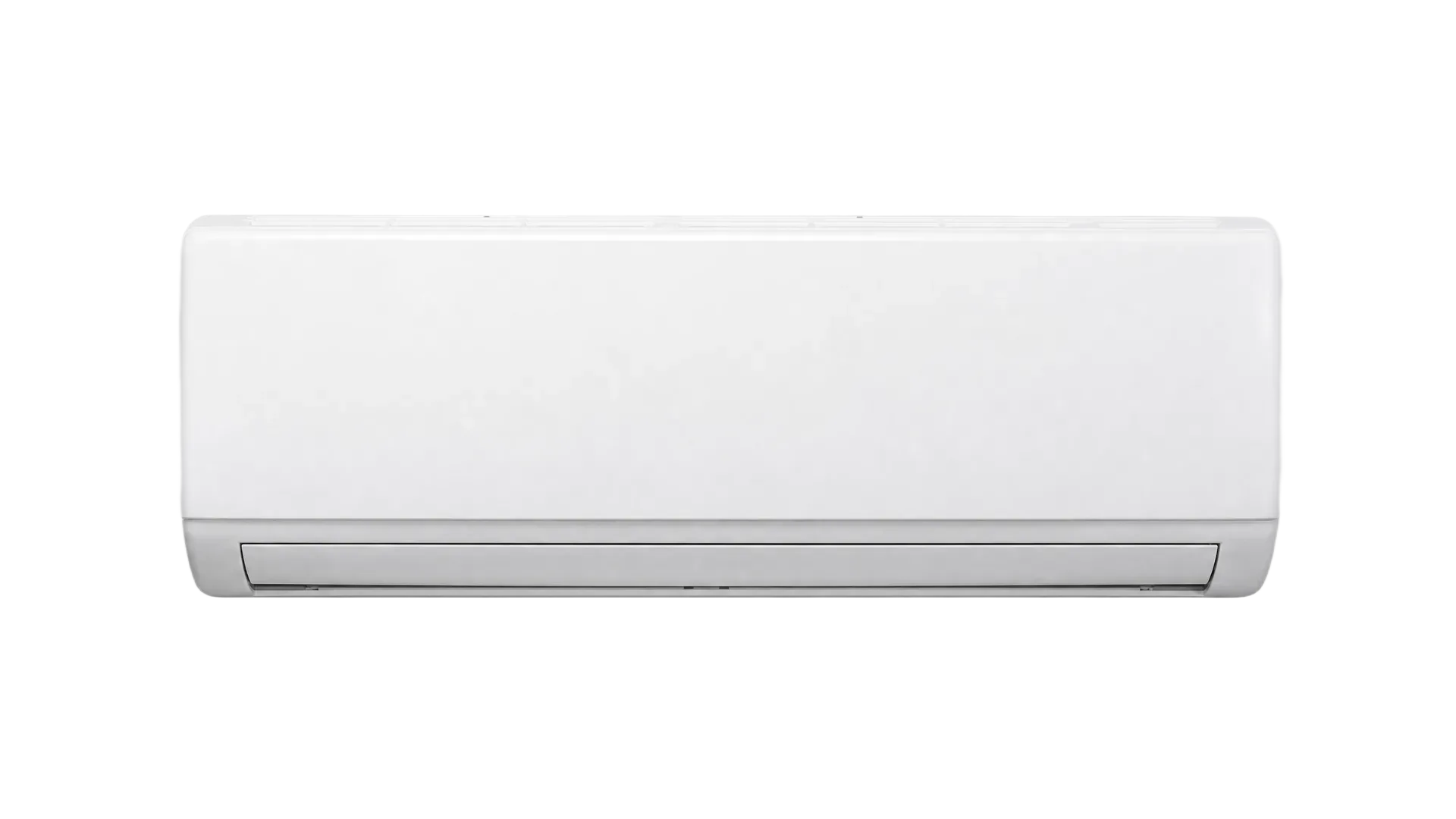
On a mild day, it holds just fine
Down to around the high 20s, a mini split keeps pulling heat out of the outside air and the room stays even. The unit cycles normally and you'd never guess it's December.
You've got a mini split and you're wondering if it can carry you through a Rhode Island winter on its own, without a furnace or boiler backing it up. Most houses here still heat with gas, so going without that feels like a real question, not a small one. You're thinking ahead to January, not just the mild weeks in October or April.
A cold climate mini split can heat a Rhode Island home through the whole winter, including the single digit nights that show up most years. What matters is the unit itself. A standard heat pump loses capacity as the outdoor temperature drops, and a lot of older or lower-end models fall off hard below freezing. A cold climate model is built to keep producing heat well below zero, which is the difference between a system that works in November and one that still works in February. If the one in your home isn't rated for that, it can leave you short exactly when you need it most, and gas backup or a second heat source fills that gap.

Down to around the high 20s, a mini split keeps pulling heat out of the outside air and the room stays even. The unit cycles normally and you'd never guess it's December.

When the outside air drops hard, the unit has to work harder for less heat, and output falls off. That's the gap a gas furnace or boiler is built to cover, and why most homes here keep one running alongside it.
You'll feel it first in the room farthest from the indoor unit. The thermostat says one number but the far corner feels colder, and you catch yourself adding a sweater instead of turning anything up. The outdoor unit runs almost constantly, and on the coldest nights you might hear it defrosting, a change in the sound as it switches into that cycle. If the only backup is a space heater, that's another appliance pulling off the same circuit, and in a house wired a certain way that matters. The real cost shows up on the electric bill, since Rhode Island power rates are among the highest in the country, and a mini split working flat out in January isn't cheap to run alone.

This is the mini split on a normal day. It cycles on, pulls heat from the outside air, and the room holds steady at whatever you set. No noise you'd notice, no corners colder than the rest. On a mild winter day in Rhode Island, this is what it looks like to not think about it at all.

Dust on the casing usually means years of runtime, and years of runtime on a system asked to do all the heating show up in the cold snaps. The unit runs longer, the air coming out feels cooler than it should, and it starts leaning on backup heat strips that drive up a power bill that's already steep here.




A mini split that's losing ground on the coldest nights isn't broken. It's doing what it was built to do, and it's telling you it needs backup. In Rhode Island, where most houses already have gas and electric rates run high, that backup matters twice over: a gas furnace or boiler picks up the load for less than a mini split running flat out on electric heat alone. Getting that paired up right, the mini split sized and set to carry the mild days and the backup system wired in to take over when it's cold, is an install job, not a settings fix. A contractor local to Rhode Island who works on these systems every winter has seen which rooms run cold first and what it takes to fix that for good. Send the form and that search is off your plate. One contractor gets your request, not five, and from there it's theirs to sort out while you stop losing heat in the far corner.
A mini split pulls heat out of the air outside, not from a flame or an element. As the outdoor temperature drops, there's less heat in that air to pull, and the unit has to work harder for the same output. Below a certain point, the compressor is running close to flat out just to hold the room steady. It isn't losing efficiency by accident. It's running out of raw material to work with, and no amount of cycling changes how much heat is actually sitting in air that cold.
A gas furnace makes its own heat by burning fuel, so it doesn't care what the outdoor air is doing. It puts out the same heat at 10 degrees as it does at 40. That's why most Rhode Island homes were built around one, and why it makes sense as the backup on the nights a mini split can't keep pace. The two aren't competing for the same job. One handles the shoulder months efficiently, the other covers the stretch where outdoor heat runs short.


Run it as your only heat, and you're betting on the coldest week of the year, every year. If the mini split falls behind at 10 degrees, you've got no gas furnace or boiler to carry the house through that stretch.
Keep the gas furnace as backup, and the mini split handles everything above freezing on its own, which in Rhode Island is most of the winter. The furnace only has to work the nights the mini split can't.
At 29.48 cents a kilowatt-hour, every hour your mini split spends straining through a cold snap shows up on the bill. Lean on it alone through January and you're paying top dollar for heat it's struggling to make. A gas furnace backing it up keeps those hours cheap.
EIA-861 2025 statewide residential average
A mini split alone can get you through a lot of a Rhode Island winter, but not all of it. It's a strong partner to a furnace, not a replacement for one. The nights that matter are the coldest ones, and those are exactly when you don't want to find out your only heat is losing ground. If your mini split was sized or installed without that backup in mind, it's worth having someone look at how the two systems are set up to work together. A contractor who installs these year round in Rhode Island knows where that line usually falls, how a given unit holds up at 10 degrees, and what a proper backup setup looks like in a house like yours. You'd be matched with one local contractor for this, not a handful of companies calling you back, so the person who shows up already knows the equipment and the climate they're working in.

Finding a pro stops being your job



