








Can a mini split heat a basement in a Rhode Island winter

A local pro who knows mini splits gets your details and gets in touch.

Match me with a pro

A mini split can heat a basement through a Rhode Island winter, but it has to be sized and installed for that job. Below freezing, a heat pump works harder to pull warmth from outside air, and its output drops. Most basements lose heat into the ground and through rim joists the unit never sees, so an undersized mini split runs constantly without catching up on the coldest nights, typically January and February here. The fix isn't a bigger thermostat setting. It's the right unit for the space, placed where it can actually reach the room, sometimes backed up by another heat source for the worst stretches. A mini split sized and installed right for a Rhode Island basement will carry it through winter. One sized for a sunroom in Florida won't.

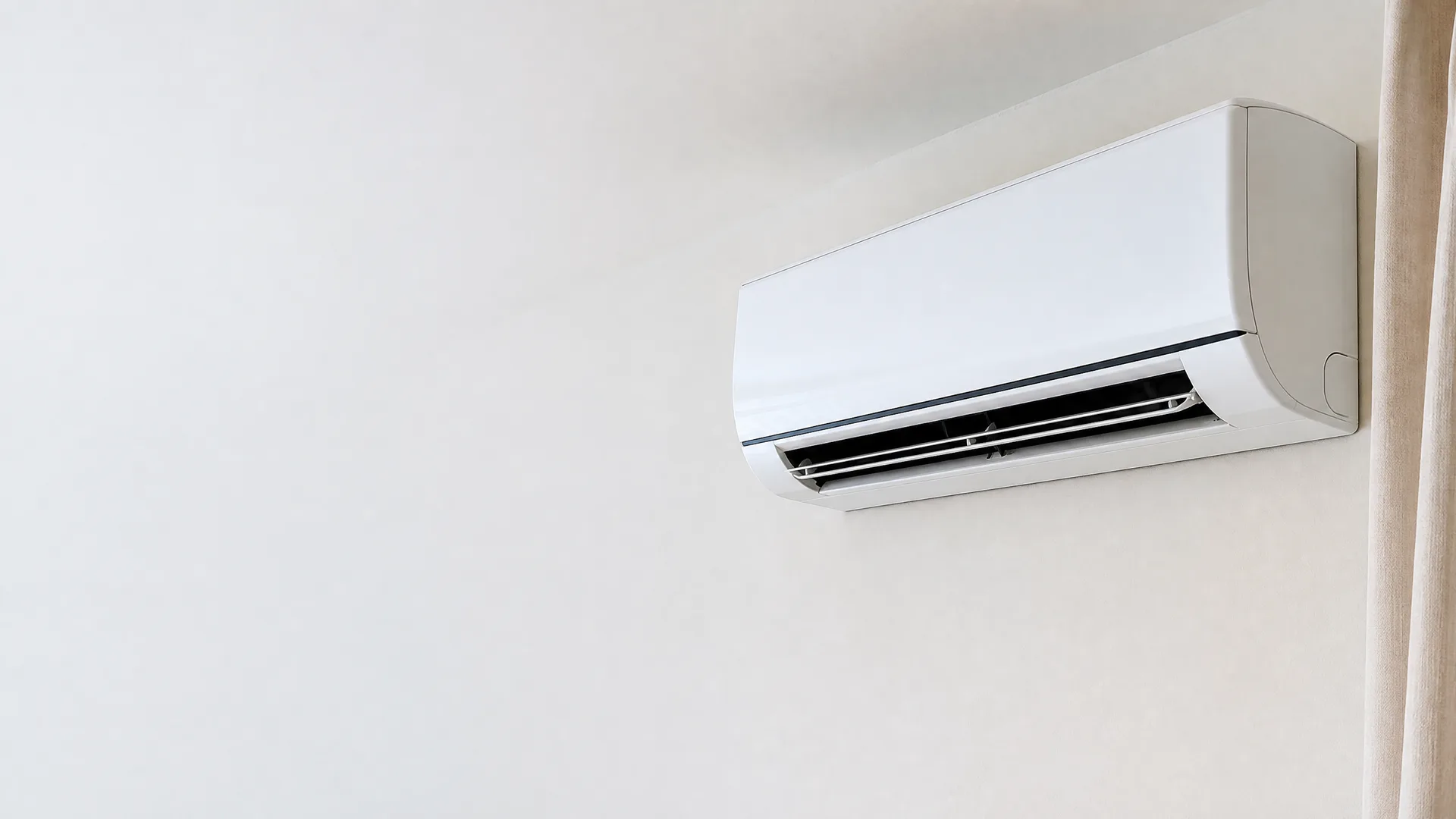
A white wall-mounted mini-split air conditioner unit installed high on a plain beige wall near the ceiling, with empty wall space to the right.

Cold climate units keep rated output

Standard heat pumps lose much of their capacity once it drops below freezing. A cold climate mini split is built to keep delivering close to its rated heat output down to 5 degrees or lower, which matters on the nights Rhode Island sees single digits. Checking that rating against the unit's size for the basement is part of sizing the install correctly, not something to guess at after it's in.

A white wall-mounted mini-split air conditioner indoor unit on a plain light-colored wall, with a beige curtain at the right edge of the frame.

Where the heat actually goes

A basement loses warmth through its foundation walls and slab into the surrounding ground, which stays cold all winter even when the air above it warms up. That steady pull is different from the heat loss in an upstairs room with windows and exterior walls. An installer sizing the mini split has to account for that ground loss, not just the square footage, or the unit will run constantly and still fall short on the coldest days.

Why is the basement still cold with the mini split running

You run the unit and the room never quite catches up. The thermostat says 68 but the concrete floor stays cold underfoot, and you can feel a draft near the sill where the foundation meets the framing. On the coldest nights the outdoor unit may be caked in frost and the air coming out of the indoor head feels cooler than usual. If the basement holds a furnace, water heater or finished living space, a unit that can't keep pace means pipes near exterior walls sit closer to freezing than you'd want and anything you're storing down there stays damp.

Single-story house with tan horizontal siding and a dark shingled hip roof, fronted by a patchy green and brown lawn and a concrete walkway leading to the covered entry.

That same unit works through the summer too. Averaged across Rhode Island, the summer dew point runs 61°F in June, July and August, by NOAA's numbers. That's heavy, sticky air, the kind that makes a room feel warmer than the thermostat says. A mini split sized right pulls that moisture out as it cools, which is part of why basement sizing matters twice over. Undersized for winter heat, it's also undersized for summer humidity, and a damp basement at 61°F dew point stays clammy no matter what the temperature reads. You'd notice it in the musty smell and the sweat on cold pipes before you'd notice it on a gauge.

NASA POWER T2MDEW county cells weighted by homes

A man seen from behind raises his hand to wave at a woman standing in the open front doorway of a single-story house with gray shingle siding, white columns and a gabled porch entry.

How a mini split actually heats a cold basement

A mini split's outdoor unit pulls heat out of the outside air and moves it inside through refrigerant lines to the indoor head. Below freezing, that refrigerant has to work harder to grab the same amount of heat, so the compressor runs longer and at a higher capacity to keep up. A cold climate system has a bigger compressor and a different refrigerant blend for exactly this, and some run a vapor injection cycle that boosts heat output at low outdoor temperatures. None of that works if the indoor head is undersized for the basement or mounted somewhere it can't get air across the whole room, which is a sizing and placement decision made at install.

Where the basement loses heat into the slab or through the sill also changes where the head should go and how big it needs to be, and that's specific to your basement, not basements in general. That's the kind of call a contractor makes after walking the space, not something to guess from a chart. If you'd rather not call around and explain your basement's layout three or four times to get comparable quotes, you can get matched with a contractor who installs cold climate systems and let them reach out to you instead.

A living room corner with a light beige sofa holding a textured taupe cushion, a large ceramic vase of olive branches by a window, a framed neutral artwork on the wall, and a dark bowl with stacked books in the foreground.
A gray-haired bearded man in a dark coat and scarf dusted with snow stands smiling in a dimly lit entryway with a white front door, a side table with a lit lamp, an oval mirror, and a patterned rug.
An older bearded man in a dark snow-dusted coat and gray scarf stands just inside a dimly lit home entry, with a framed picture, lit table lamp, and an adjoining room with a fireplace behind him, and snow visible through the open door.
A gray-haired, bearded man in a dark snow-dusted coat stands smiling in a dimly lit entry hall with a staircase, a lit table lamp, a framed picture, and a living room visible through a doorway.
An older man with gray hair and a beard, wearing a dark jacket dusted with snow, stands smiling in a dimly lit hallway with lamps and a living room visible behind him.

A pro who works on mini splits

A basement that won't hold heat through a Rhode Island winter usually comes down to sizing, placement, or a unit that isn't rated for the cold, and none of those get fixed by turning the thermostat up. Figuring out which one is wrong means someone measuring the room, checking the foundation and the sill, and matching the right cold climate unit to what's actually down there. Most homeowners handle that by calling a few installers, going over the basement with each one, and waiting on quotes to compare before picking anyone. That takes evenings you don't have back, especially with gas heat already running and the power bill climbing on top of it. Submitting this request means one contractor who installs mini splits in Rhode Island basements gets your details and reaches out to you. You explain the basement once, not four times, and you're not stuck sorting through bids while the room downstairs stays cold.

One mini split head, or two

A single head mounted at the top of the basement stairs or on one end wall heats whatever room it's pointed at and leaves the rest to drift. A finished basement with a bedroom at one end and a laundry area at the other often ends up with one half at 70 and the other stuck in the low 60s, because the warm air from that one head never makes it past the first doorway. Two smaller heads, one for each end, cost more up front and mean a second indoor unit on the wall, but they hold an even temperature through a Rhode Island January in a way one oversized head struggles to match. Which layout makes sense depends on how the basement is split up and where people actually spend time down there.

Mini split alone, or mini split with backup

A cold climate mini split sized right for the space can carry a Rhode Island basement through the winter on its own, down to the single digits. Some homeowners still want a backup, usually because the basement has a furnace or boiler already running for the rest of the house, or because they don't want to find out what happens to a finished basement if the mini split ever trips off on a bitter night. Pairing the two means the mini split does most of the work most days, since it moves heat rather than burning gas to make it, and the backup only kicks in if it's needed. Running both isn't necessary for the mini split to do its job, it's a choice about how much backup you want.

A dusty beige wall-mounted mini-split air conditioner indoor unit installed high on a plain light-colored wall below the ceiling.
Before you get your mini split installation
A white wall-mounted mini-split air conditioner near the ceiling of a room with light gray walls, white crown molding, and a beige curtain at the left edge.
After you get your mini split installation

Running the mini split alone

A mini split can carry the basement by itself if it's a cold climate unit sized for the space and the room is finished and insulated. You run one system, one thermostat, and the basement stays even through January. The tradeoff shows up on the power bill, since electric heat costs more to run here than gas does, and Rhode Island's rates are among the highest in the country. If the basement is small and tight, that difference may be worth not running ductwork or baseboard down there at all.


Backing it up with gas heat

Most homes here already heat with gas, and a lot of basements have a duct run or a baseboard loop reaching down from the main system. Letting that stay as backup means the mini split handles the basement most days and the gas system picks up the coldest stretches, when a standard heat pump's output drops the most. You're running two systems instead of one, which means two things to maintain, but you're not leaning on electric resistance backup or asking the mini split alone to cover a hard February night.

Power costs 29.48 cents per kilowatt-hour statewide

That rate makes a basement mini split a different bet here than it would be in a state with cheaper power. A unit that's undersized or placed wrong runs longer to make up the difference, and every one of those hours shows up on the bill at close to 30 cents.

EIA-861 2025 statewide residential average

A mini split that's already handling the basement in winter usually keeps up with it in summer too, once the ductwork or lack of it stops being a factor at all.

A basement that stayed damp and uneven with window units or a single vent off the main system often evens out once a head is sized and placed for that specific room.

A woman wrapped in a thick beige fleece blanket sits on a sofa with an open book on her lap, beside a lit table lamp, with a frost-covered window behind her.
An older woman with gray hair in a bun and glasses, wearing a beige knit sweater, smiles while looking to the side in a warmly lit kitchen, with a loaf of bread on the counter in the foreground and a snowy scene outside the window.

Where that leaves your basement

  • A cold climate mini split sized and placed for the room can hold a Rhode Island basement through winter.
  • A standard unit, an undersized one, or a single head covering a split-up basement falls short once it drops below freezing.
  • Ground contact and poor insulation pull heat out of a basement faster than most upstairs rooms lose it.
  • At close to 30 cents a kilowatt-hour, a mini split working harder than it should costs more every month it runs.
  • The same unit that keeps up in January handles the muggy stretch from June through August too.
  • Getting this right means someone measuring the space, checking the insulation, and matching the unit to both.

So the answer is yes, with conditions. A cold climate mini split, sized for the room and placed where it can actually reach every corner, will hold a Rhode Island basement through January. A standard unit won't, and neither will the right unit in the wrong spot. The basement's own problems work against whatever system you pick. Ground contact pulls heat out through the floor and walls all winter, and if the insulation isn't finished off, that heat loss doesn't stop. None of this shows up only as a cold room. It shows up on the power bill, since Rhode Island's electric rate sits near the top of the country, and a unit straining to keep up runs longer hours at that rate every month.

Figuring out which of those problems applies to your basement, the sizing, the placement, or the unit itself, isn't something you work out by adjusting the thermostat and waiting. It takes someone in the space with a tape measure and a sense of where the insulation is thin. Finding that person usually means calling around, describing the basement to three or four different contractors, and sorting through quotes that aren't quite comparing the same job. That part of it doesn't have to fall on you. What's left after that is straightforward: a cold climate system, right sized, placed where the basement actually loses heat, carries the room through winter and the muggy stretch that follows without you thinking about either season separately.

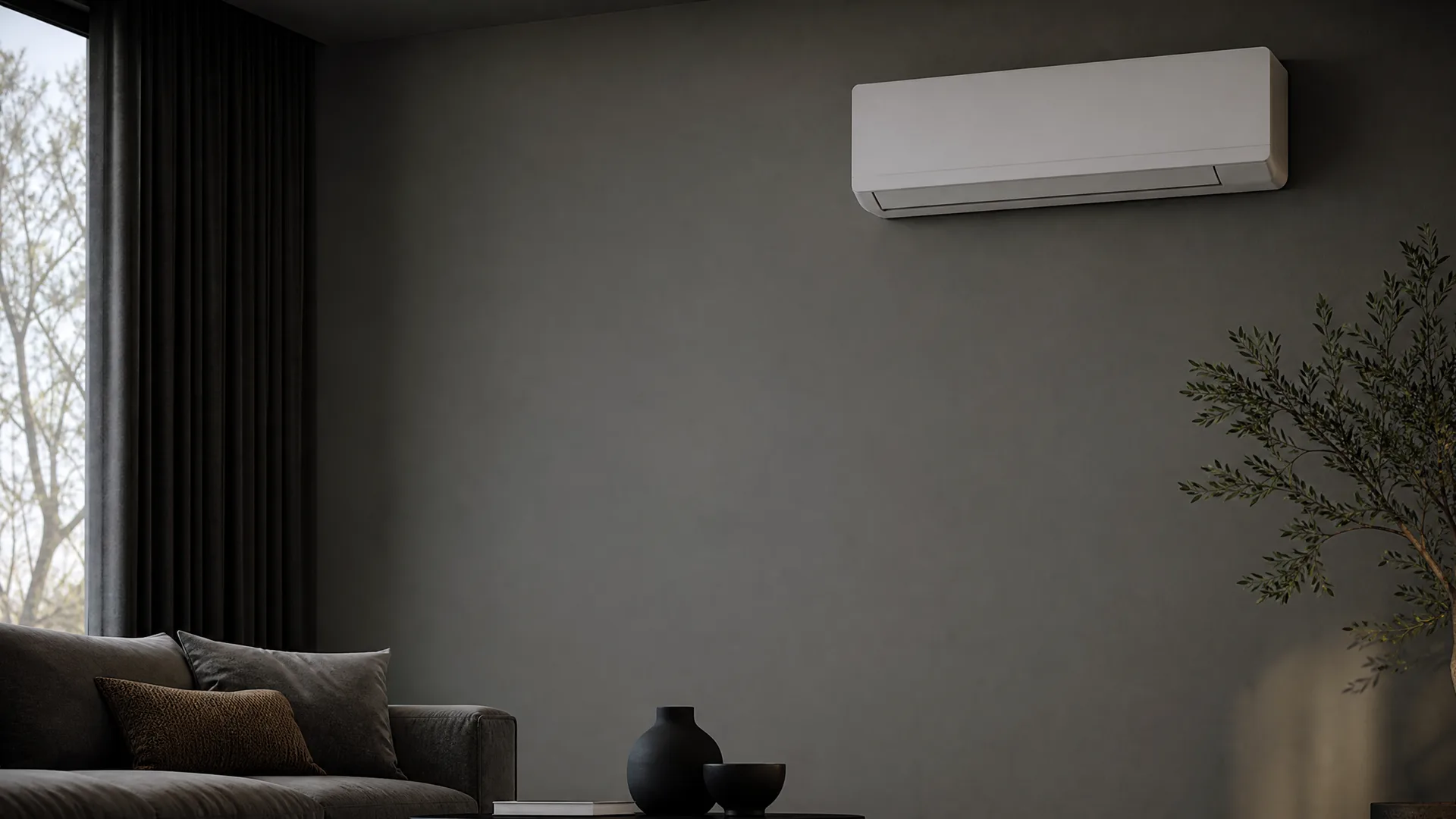
A white wall-mounted mini-split air conditioner on a dark gray interior wall above a gray sofa, with a window and curtain at left, a potted olive-like plant at right, and a black vase and bowl on a table in the foreground.

Get your mini split to the right pro

One form replaces the calls you'd make to find a mini split pro.

Step 1 of 3: Equipment