What defrost mode means on a Rhode Island mini split

Step 1 of 3: Equipment

Defrost mode is your mini split pausing heat for a few minutes to melt ice off the outdoor unit. In a Rhode Island winter, cold damp air passes over that outdoor coil constantly, and moisture in the air freezes onto it. Once enough frost builds up, the unit stops pulling heat from outside, blows cold air inside for a short while, and runs its system in reverse to warm the coil and melt the frost. You might feel a gust of cool air or hear the fan stop and start. That's normal and it should pass in ten to fifteen minutes. If defrost cycles are happening often, running long, or the unit never comes back to blowing warm air, something isn't cycling the way it should. That's worth having a contractor look at rather than waiting it out, especially with how much it costs to heat a home here on electricity alone.

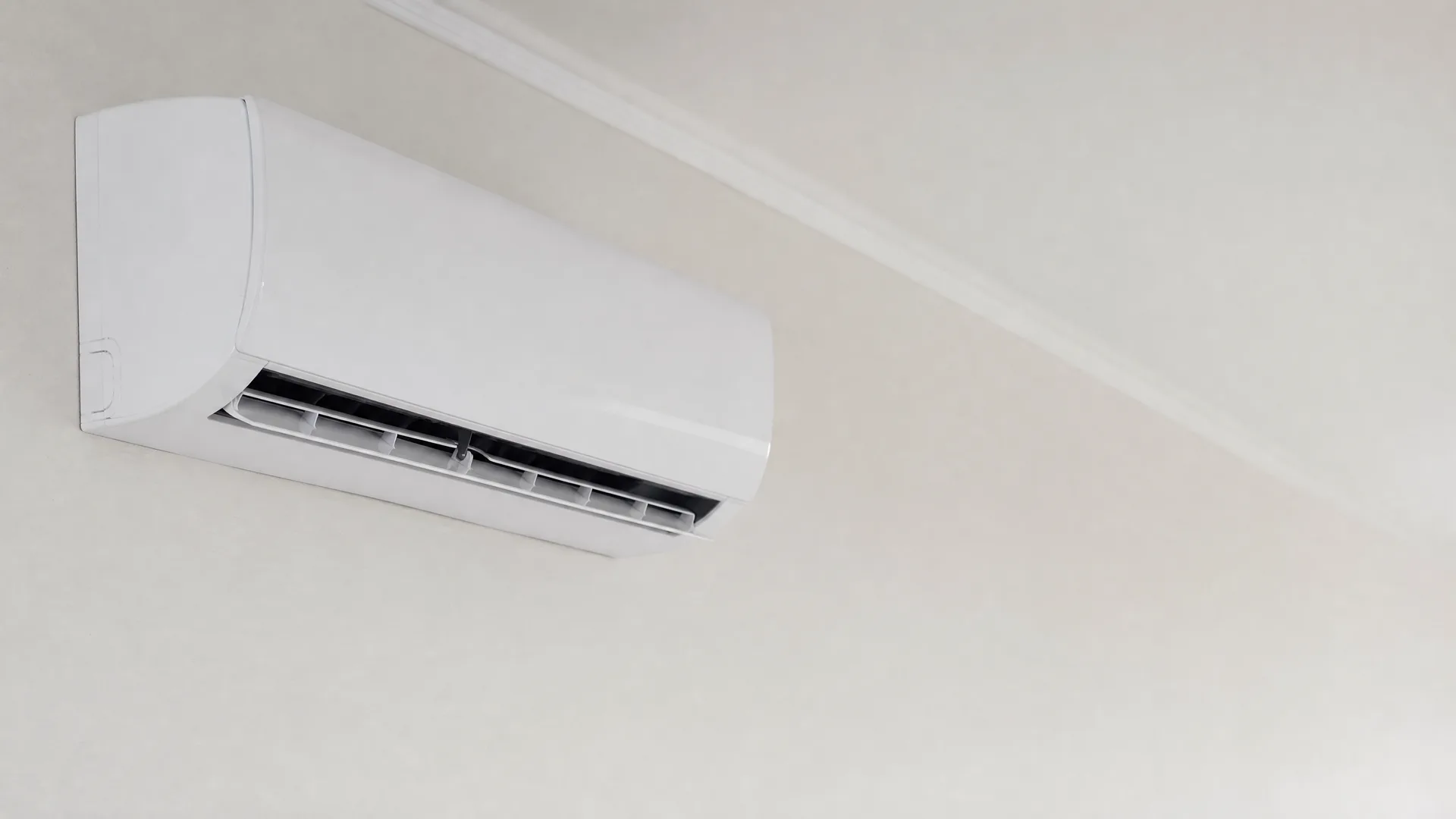
A white wall-mounted mini-split air conditioner indoor unit installed near the ceiling on a plain beige wall.

Why the fan stops too

During defrost the outdoor fan shuts off along with the heat. That's normal. Running the fan while the coil is still being warmed would just blow cold air through the house and slow the whole cycle down. You might hear the compressor keep working, or notice a hiss as refrigerant reverses direction. Inside, most systems either stop blowing air or blow it at low speed until the cycle ends and heat comes back.

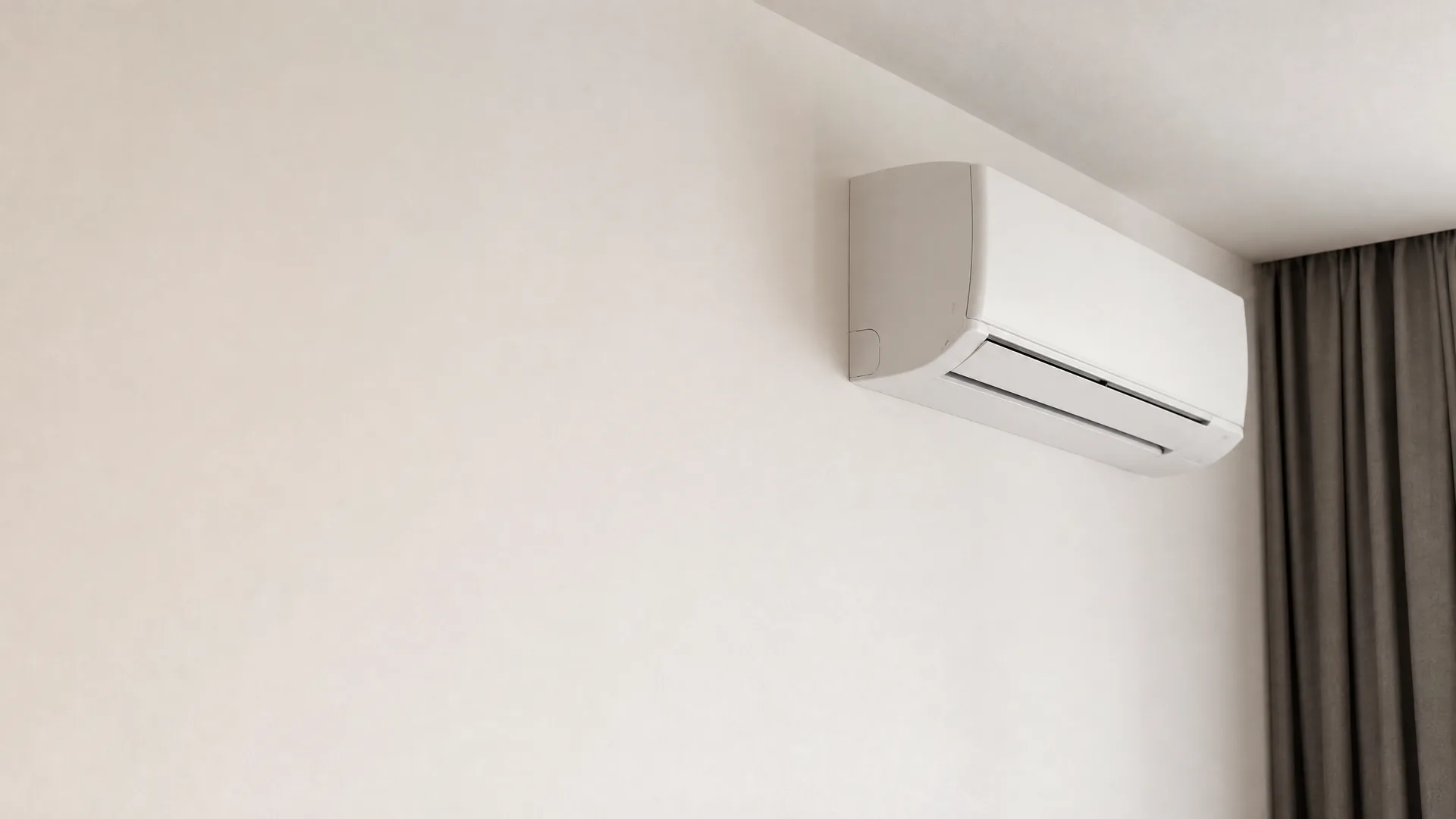
A white wall-mounted mini-split air conditioner on a plain off-white interior wall, with a gray curtain at the right edge.

How long one cycle runs

A defrost cycle usually runs somewhere between five and fifteen minutes, then the unit switches back to heating on its own. If your system is doing this every hour or two through a cold snap, that fits what coastal Rhode Island winters do to an outdoor coil. If it's cycling more often than that, or running long without clearing the frost, something is keeping the coil from shedding ice the way it should.

Why does my mini split blow cold air for a few minutes?

You'll feel it at the wall unit: the air coming out turns cool, sometimes you'll hear a whoosh or a gurgle from the line set, and the room temperature dips a degree or two. Step outside and the outdoor unit looks like it shut off, with maybe a wisp of what looks like steam coming off the coil. All of that is defrost working as it should. What's worth paying attention to is how often it happens and how long it lasts. A short cycle every hour or so on a cold night is normal. If it's running long, happening constantly, or the house isn't warming back up between cycles, the unit may be icing faster than it can clear, and the rooms you're trying to keep warm will fall behind.

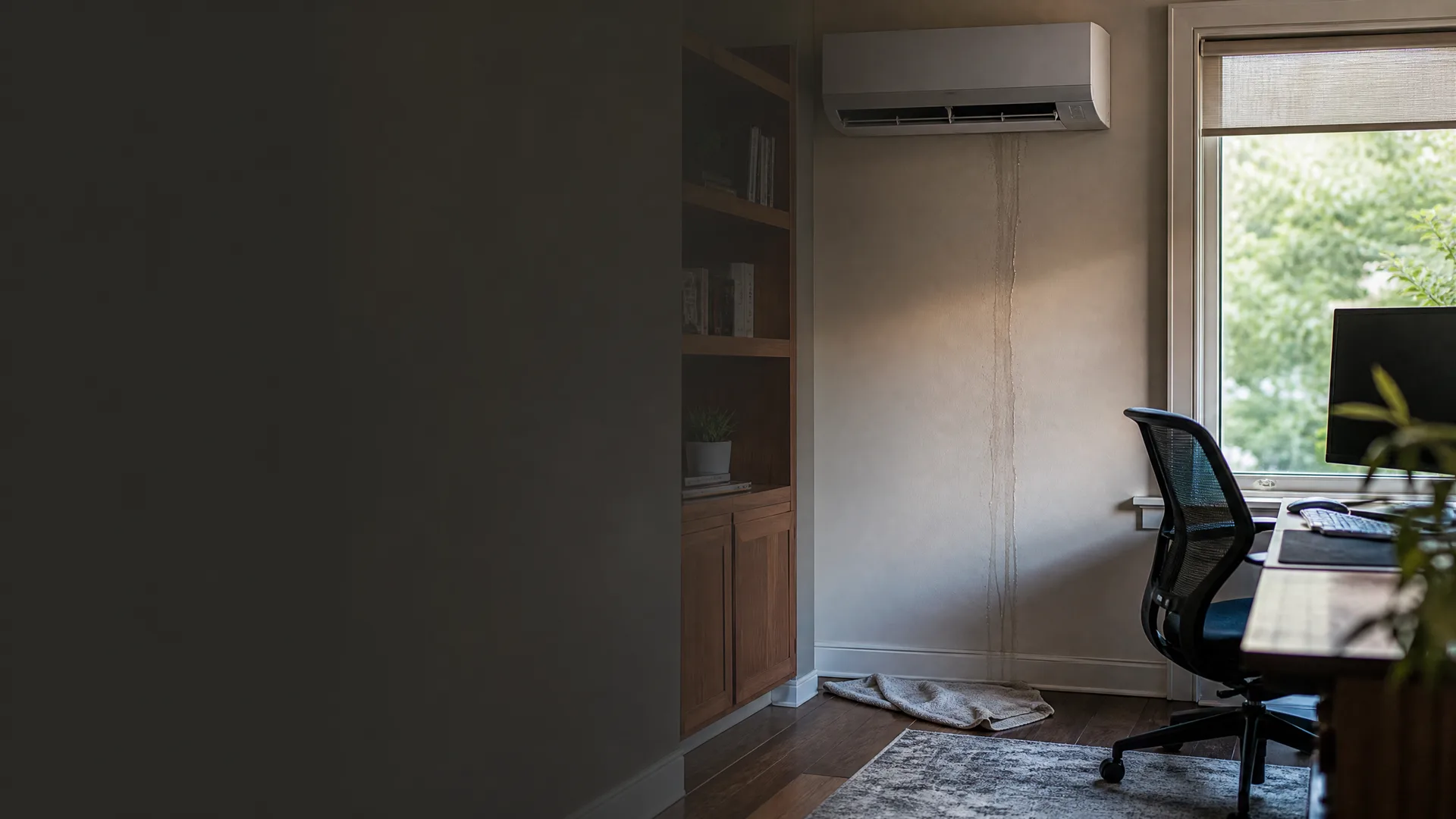
A dim room with a white wall-mounted mini-split air conditioner above a wall with a vertical line mark, a wooden built-in shelving unit with books and a potted plant at left, and a desk with monitor, keyboard and mesh office chair by a window at right.

You're at the desk in the home office, working through the afternoon while the AC keeps the room cool against the sticky air outside. You notice the wall under the indoor unit first, a dark streak running down from the casing, the paint gone dull where it's wet. There's already a towel on the floor, soaked through at one end. The unit is still blowing cold air, nothing sounds wrong, but the water keeps coming. You press a finger to the wall and it's damp a foot below the unit. You call the people in the living room to come look before it spreads any further down the drywall.


A wooden table in the foreground holds a closed laptop and a ceramic mug of coffee, with a spindle-back wooden chair behind it, a beige wall with paneled wainscoting, a window at left, and a kitchen counter with a cutting board, bowl of fruit and greenery at right.

How the unit decides when to defrost

The outdoor unit has a sensor on the coil itself that reads its temperature, and the control board tracks how long the system has been running. When the coil temperature drops low enough and enough run time has passed, the board calls for defrost. Some units also reverse the reversing valve to run like an air conditioner for those few minutes, pushing hot refrigerant backward through the outdoor coil to melt the frost from the inside. That's the gurgle you might hear from the line set. Once the coil sensor reads a set temperature again, the board switches back to heating.

A mini split that short cycles through defrost too often, or one where frost comes back within an hour instead of several, usually has a sensor reading wrong or a reversing valve not fully switching. Sorting that out means someone who works on these systems locally, in Rhode Island cold, checking the sensor and the valve rather than guessing. Finding that person usually means a few calls, explaining the same thing to each one, then sitting with quotes trying to compare them. Request service here and one local contractor who handles this equipment through Rhode Island winters takes the call.

A dark ceramic mug on a round wooden table beside a light grey sofa with a woven cushion and knit throw, with a window, potted plant, floor lamp and wooden cabinet blurred in the background.
A woman with long light-brown hair in a gray knit sweater sits in a living room looking off to the side, with a sectional sofa, houseplant, lamp, wooden table and large windows behind her.
A woman in a chunky gray turtleneck sweater sits indoors looking off to the side, with a blurred dining table, chairs, pendant lamp and window behind her.
A woman in a cream knit sweater with her hair in a bun stands near a window, looking off to the side, with a gray sofa, houseplant and open kitchen with pendant lights blurred behind her.
A woman with long brown hair in a cream knit sweater stands near a window, looking to the side, with a white sofa, shelving, and a hallway visible behind her.

Explain it one time

A mini split that won't come out of defrost, or one that drips water down the wall where the line set enters, isn't something to watch for another week in a Rhode Island winter. With gas heat as the backup for most houses here, a mini split stuck in a bad cycle is usually working alone to warm that room, and power here costs enough that a unit short-cycling through defrost all night shows up on the bill fast. Figuring out whether it's the defrost sensor, the control board, or ice that's built up because the outdoor fan isn't clearing it properly takes someone who works on these systems through a Rhode Island winter, not just a summer. Instead of searching through contractors, calling a few, and describing the same dripping wall and whooshing noise to each one, this goes to one local contractor who already knows what tends to fail on mini splits in this kind of cold. Send the details once and let someone who handles this equipment every season take it from here.

A white wall-mounted mini-split air conditioner on a beige interior wall, with a cream curtain and window at left, a potted plant on a ledge at right, and a wood floor below.

Defrost cycling the way it should

This is what a normal defrost looks like when it's done. Heat pauses, the coil clears, heat comes back, and the room never falls behind. A unit that's clean inside and out can move through that cycle without a fight.

A dusty, discolored white wall-mounted mini-split air conditioner unit installed high on a plain interior wall below a white ceiling molding.

A coil that can't shed frost clean

Dust packed into the vents and across the top panel holds heat where the coil needs to lose it. A unit this dirty can run longer and more frequent defrost cycles, and some of that frost has nowhere good to go but down the wall.

A dusty beige wall-mounted mini-split air conditioner indoor unit installed high on a plain light-colored wall below the ceiling.
Before you get your mini split repair
A white wall-mounted mini-split air conditioner near the ceiling of a room with light gray walls, white crown molding, and a beige curtain at the left edge.
After you get your mini split repair
  1. The coil sensor reads a temperature cold enough to mean frost

  2. The control board checks that enough run time has passed

  3. The reversing valve switches the system into cooling mode briefly

  4. The outdoor fan shuts off while the coil warms and sheds ice

A woman and a child wrapped together in a knitted gray blanket on a couch, with the child's head resting on her shoulder and a lit table lamp and houseplant in the background.
An older woman with short gray hair in a cream cable-knit turtleneck sweater smiles while looking to the side in a wooden kitchen, with a round loaf of bread on a board in the foreground and a lit candle by a dark window.

Power costs 29.48 cents per kilowatt-hour statewide

At 29.48 cents per kilowatt-hour, every extra minute your mini split spends stuck in defrost or fighting a bad cycle shows up on the bill fast. A unit that defrosts properly and gets back to heating is the cheaper unit to run, month after month.

EIA-861 2025 statewide residential average

What defrost mode tells you

  • Defrost mode means your mini split is melting frost off the outdoor coil before going back to heating.
  • The cycle should last a few minutes, send cool air briefly, then return to normal heat on its own.
  • A unit stuck in defrost, icing over outside, or leaking water inside needs a repair call, not more waiting.
  • A tech who services mini splits all winter in Rhode Island has seen what causes a bad defrost cycle here.
  • One licensed local contractor takes the call, so you explain the problem once instead of repeating it to several companies.
  • Knowing what defrost is supposed to look like is what tells you when this one isn't doing it.

Defrost is the outdoor coil shedding frost so the system can keep heating through a Rhode Island winter. It should take a few minutes. The air at the wall unit turns cool, the outdoor fan goes quiet, and then heat comes back without you doing anything. That's the whole cycle, working the way it's built to work.

When it doesn't go back to heat, when the outdoor unit is still iced over after the cycle ends, or when water is coming down the wall where the line set enters, that's not something to leave for a milder stretch. It's a sign the system is losing a fight it's supposed to win on its own, and every cycle it loses costs more to run.

Rhode Island winters put a lot of coil time on these units, and a contractor who services mini splits here through the cold months has seen the sensors that drift, the boards that misread run time, and the coils that ice over because something else failed first. That's the kind of problem that gets found by someone who's looked at the same failure before, not guessed at fresh each time.

Getting matched means one licensed, local contractor takes the call. You explain what the unit is doing once, to someone who already knows what a Rhode Island winter does to this equipment, instead of repeating it to a handful of companies while you sort through who can actually get to it.

Sunlit corner of a room with a wooden sideboard holding a ceramic vase of olive branches and a dark wooden bowl, beside a white-framed window, a hardwood floor and woven rug.
A wooden cabinet holding a pale ceramic vase with leafy branches stands beside a beige wall in a sunlit room with hardwood floors, a jute rug, and a window showing green foliage outside.
Sunlit room corner with a beige upholstered sofa holding a rust-brown cushion, beside floor-length linen curtains at a window, over a wood floor with a woven rug.
Corner of a room with beige walls, a framed photograph, a floor-length linen curtain beside a window, an upholstered armchair with a knit pillow, white baseboards and trim, wood flooring and a pale rug.
Sunlit living room corner with a beige upholstered armchair with a cushion, linen curtains beside a wooden-framed window, green vertical panelled wall with a framed print, and a wooden table edge over a woven rug.

Skip the calls to every shop

Your request stays with one local pro.

Skip calling around

You're not committing to anything by asking.