Running the way it should
This is a mini split switching modes the way it was built to. Set it to heat and the air coming off the indoor unit is warm within a few minutes. No cold draft, no hunting, no streak forming on the wall underneath it.
A mini split blowing cold air when it should be heating usually comes down to the reversing valve, the part that switches the system between cooling and heat mode. If that valve sticks, the unit keeps running on the cooling side no matter what the thermostat says. A low refrigerant charge causes the same thing, since the system can't move enough heat to warm the air passing over the indoor coil. It can also be something simpler: the remote or thermostat set to cool by mistake, or a wall unit that's actually in fan-only mode. If the outdoor unit is icing over in cold weather, that's a separate issue tied to the defrost cycle. For a home heating with gas most of the year, a mini split that won't switch over on the first cold snap is worth checking before you rely on it. A contractor can tell you which of these it is.
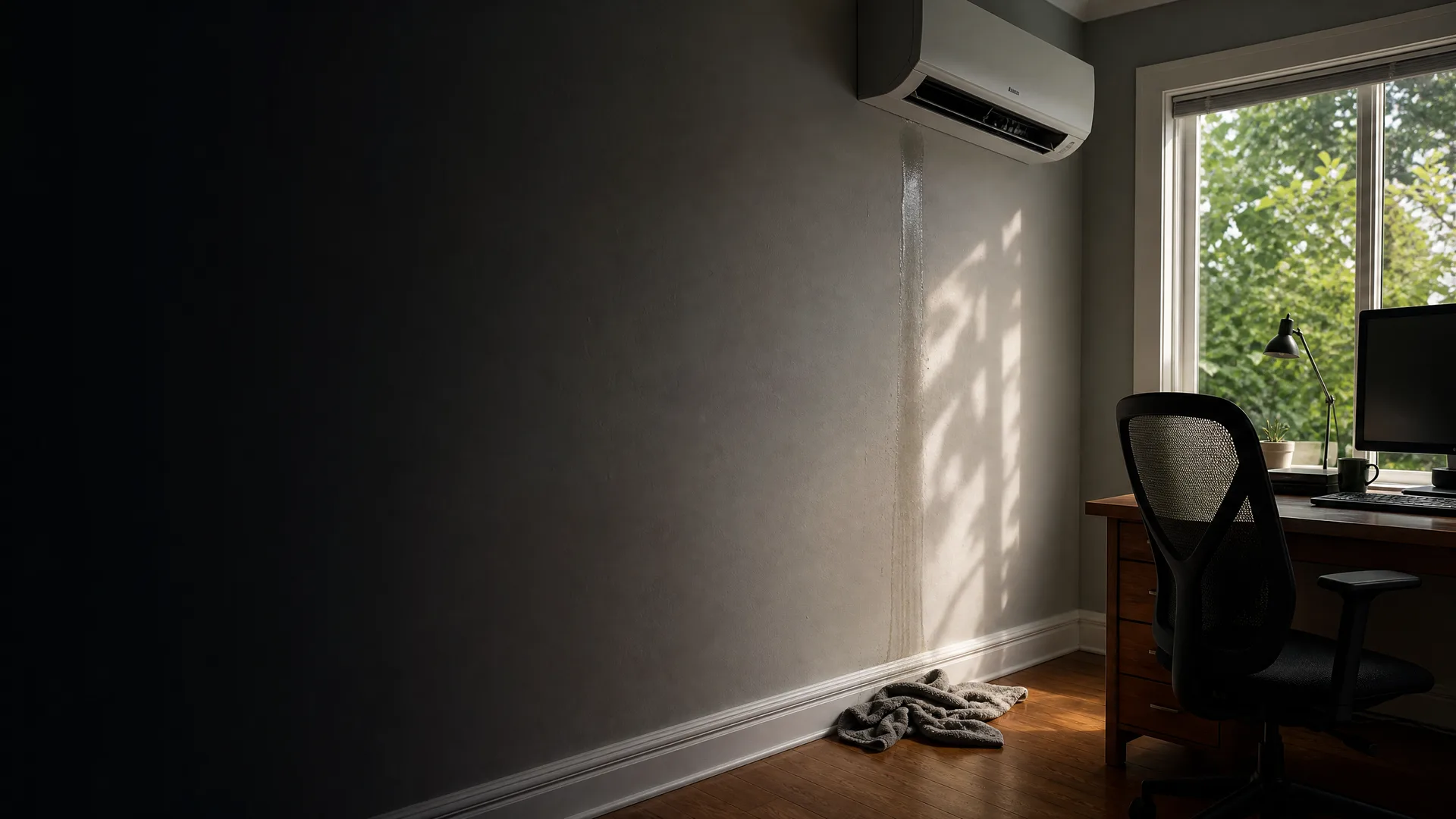
You're at your desk on a muggy afternoon, the kind where you'd expect the mini split to be pulling moisture out of the air, not adding to it. Something catches your eye below the indoor unit: a dark streak down the wall, already dry at the edges but wet where it meets the baseboard. You go get a towel and lay it down on the floor under the drip. The unit's still running, still blowing, but the air coming off it feels colder than it should for what you set the thermostat to. You stand there a second, listening to it cycle, trying to decide if this is something that waits until tomorrow or not.
You notice it first at the thermostat: you've set the unit to heat, and cold air is still coming out of the vents. Maybe the room never gets past 60 even with the unit running nonstop. Maybe you hear it cycling on and off more than it used to, trying and failing to do what you asked it to do. If you've checked and the outdoor unit is running while the indoor one blows cold, that's the reversing valve stuck in cooling mode, not a thermostat setting you missed. Left alone, the unit keeps drawing power without heating the room, and in a Rhode Island winter that means a bill for electricity that did nothing but run.

The reversing valve moves with a small electric pilot that shifts a slide inside the valve body, redirecting refrigerant one way for heat and the other for cooling. When that slide doesn't move all the way, refrigerant keeps flowing the cooling route even though the thermostat called for heat. Rhode Island winters put that valve through more cycles than most, and a valve that's slow to shift one week can stick fully the next.

Most houses in Rhode Island heat with gas, but the mini split isn't tied to that system at all. It runs on electricity alone, pulling warmth from outside air through the same refrigerant loop it uses for cooling. That's exactly why a stuck reversing valve causes this problem: there's no gas burner or furnace controls to fall back on if the valve sends refrigerant the wrong way. The mini split either reverses correctly or it doesn't heat at all.

This is a mini split switching modes the way it was built to. Set it to heat and the air coming off the indoor unit is warm within a few minutes. No cold draft, no hunting, no streak forming on the wall underneath it.

The casing yellows, dust builds in the louvers, and the unit still runs. That age doesn't cause a stuck reversing valve, but a unit that's been working this corner a long time is worth a look if it's blowing cold when you asked for heat.




Describe what your mini split is doing once, in one form.
Asking costs nothing, and the choice to hire stays yours.

The casing is white, the vents are open, and air moves through without resistance. A unit like this switches between heat and cooling on command because the reversing valve inside isn't fighting dust, grime, or a sluggish solenoid to do its job.

Dust cakes the casing and the filter behind the open panel is grimy. A mini split in this state is already working harder than it should, and a dirty, strained unit is more likely to show problems like a reversing valve that sticks instead of switching clean.

Past the reversing valve, refrigerant runs on to the indoor coil. In heat mode it should arrive hot, compressed by the outdoor unit, so the coil can give that heat to the air moving over it. If the valve hasn't fully shifted, some refrigerant bypasses that path and comes back cool instead. The coil can't tell the difference. It just passes along whatever temperature shows up, which is why the vent blows cold even though the compressor outside is working hard.
A contractor checking this won't start by guessing. They'll pull the cover, test the valve's solenoid for voltage, and check refrigerant temperature on both sides of the valve to see exactly where it's failing to switch. That's a different visit than one where someone just swaps parts and hopes. Getting matched with someone who can walk in already knowing what to test means you're not explaining the streak on the wall and the cold air twice, once on the phone and once in person.

Thermostat tells the reversing valve to switch into heat mode
The valve's solenoid gets voltage and tries to shift the slide
A working slide redirects refrigerant to carry heat indoors
A stuck slide leaves refrigerant running the cooling path instead
At 29.48 cents per kilowatt-hour, a mini split stuck in cooling mode costs you twice: it's not heating the room, and the compressor keeps drawing power trying. Leaving it running while you wait adds up fast on a Rhode Island bill.
EIA-861 2025 statewide residential average



Rhode Island summers run humid, with a dew point averaging 61°F across June, July and August according to NOAA. That's the kind of air a mini split has to work against all summer to keep a room feeling dry. A reversing valve that's stuck or slow to shift doesn't just leave you cold in winter. It can leave the unit running on the wrong side in summer too, so the room feels damp even with the fan going. If you've noticed the air feels heavier than it should with the unit running, that's worth having looked at alongside the heating problem.
NASA POWER T2MDEW county cells weighted by homes


A mini split blowing cold air when you've set it to heat points to one part: the reversing valve. It's built to shift refrigerant between a heating path and a cooling path, and when the slide inside doesn't move all the way, the system keeps running on the cooling side no matter what the thermostat says. A contractor checks this by testing the solenoid for voltage first, before touching anything else, because that test is what tells them whether the problem is the solenoid, the valve body, or something further down the line. Caught at that stage, the fix is usually one of those two parts. Left running, the compressor keeps pulling power trying to heat a room it's actually cooling, and on Rhode Island's rates that's not a small draw to leave going while you decide what to do. Most homes here heat with gas, so the mini split isn't carrying the whole load, but a valve that's stuck or slow still means one system working against itself instead of with the room. When the valve shifts the way it should, you get warm air within minutes, no cold draft while it hunts for the right mode, and no streak building on the wall under the indoor unit. That's the difference between a unit doing its job and one quietly running up a bill while the room stays cold. The sooner the valve gets tested, the more likely the fix stays small.


A stuck reversing valve won't fix itself, and with Rhode Island power rates where they are, every day spent running the compressor against cold air costs you. Instead of searching for a contractor, calling around, and explaining the same problem over and over, you answer a few questions once and get matched with a contractor who handles mini splits. They'll reach out to you directly to look at the valve and the solenoid behind it, no quote-comparing required.
Answer a few questions instead of calling shop after shop.
No fee to send it, and nothing to sign.