Why your mini split leaks water in a Rhode Island winter

Tell a local repair pro what your mini split is doing.

Match me with a pro

Why is my mini split leaking water in winter?

A mini split leaking water when it's running in heating mode feels backwards. Leaks are supposed to happen in summer, when the system pulls moisture out of the air. Seeing water drip from the indoor unit while it's heating your house through a Rhode Island winter makes you wonder if something inside is frozen, cracked, or draining wrong, and whether it's safe to keep running.

A clogged or frozen condensate drain is the most likely cause

A mini split still pulls some moisture out of the air even in heating mode, and that water has to leave through the condensate drain line. If the line is clogged with dust or algae, the water backs up and drips out of the indoor unit instead. In a Rhode Island winter, that same line can freeze solid if it runs through an unheated space, like an attic or an outside wall, which blocks drainage the same way a clog does. A cracked or disconnected drain pan is the other common cause, and it leaks regardless of the season. None of these are safe to ignore. Left alone, the water can stain ceilings, warp flooring, or run into the wall near the unit.

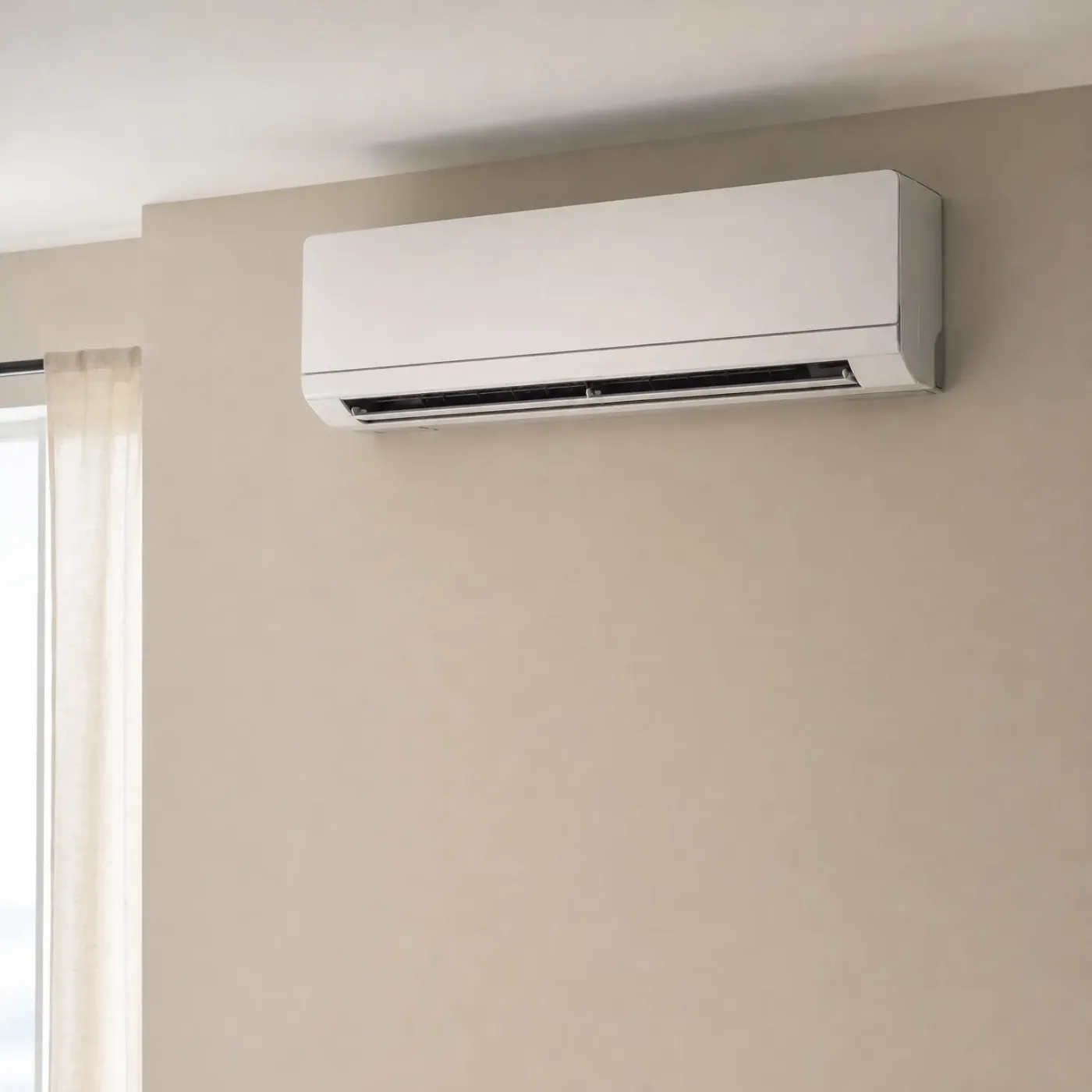
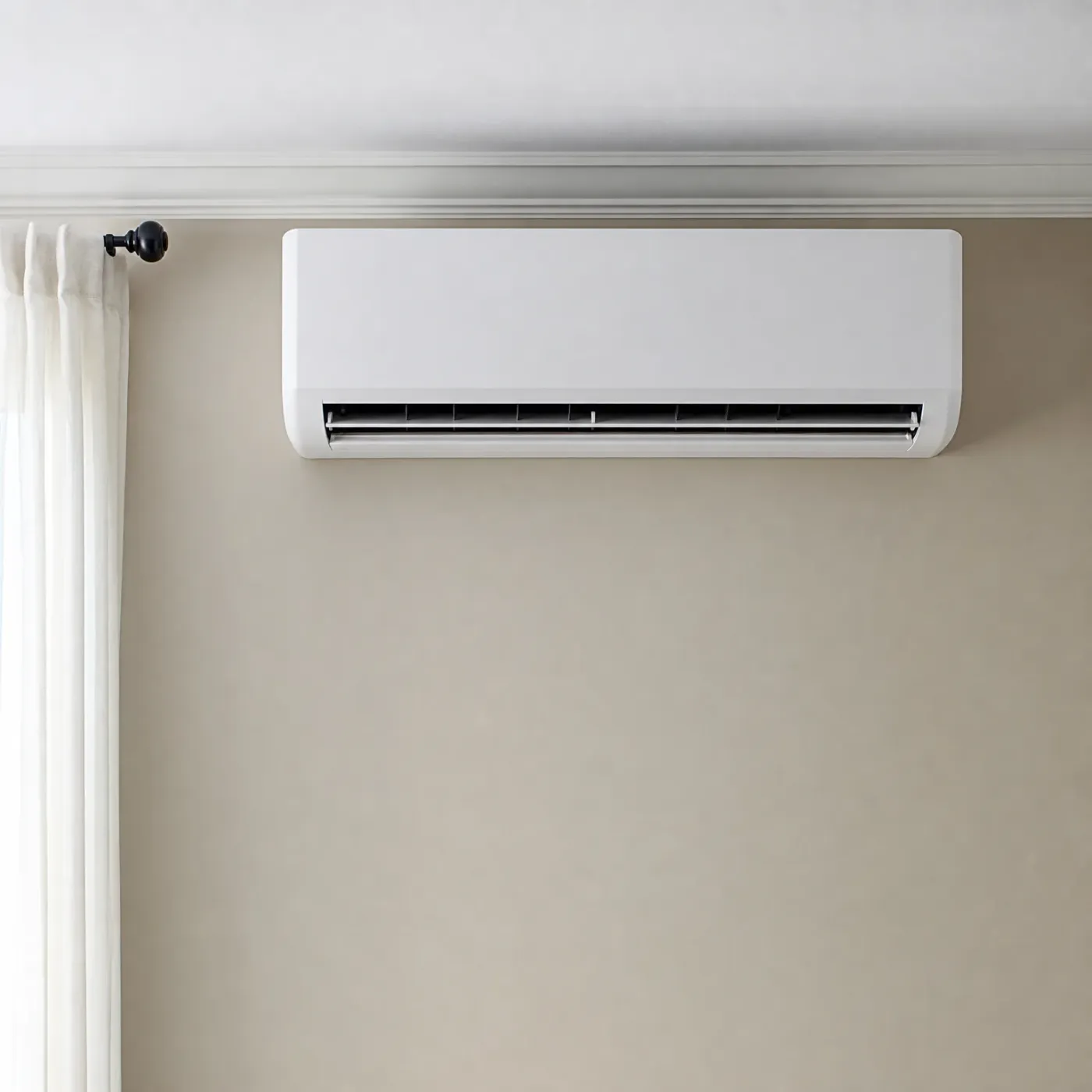
A white wall-mounted mini-split air conditioner installed high on a beige interior wall near the ceiling, with a sheer curtain and window at the left edge.

Running clean

A mini split that's draining right sits quiet with the vent closed and the panel clear. Condensation forms on the indoor coil and leaves through the drain line without ever reaching the wall or floor beneath it. No staining, no drip, no sound of water hitting the pan.

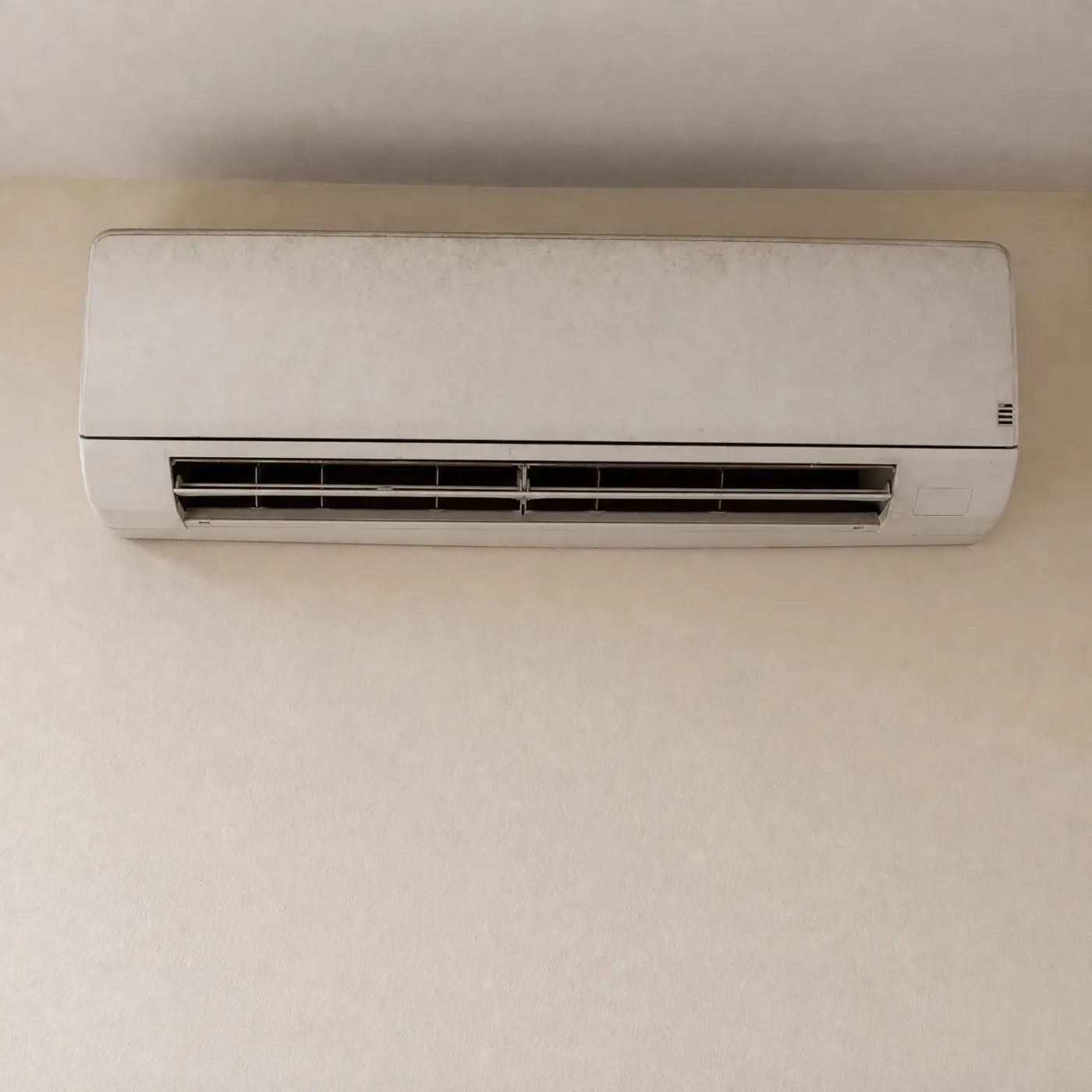
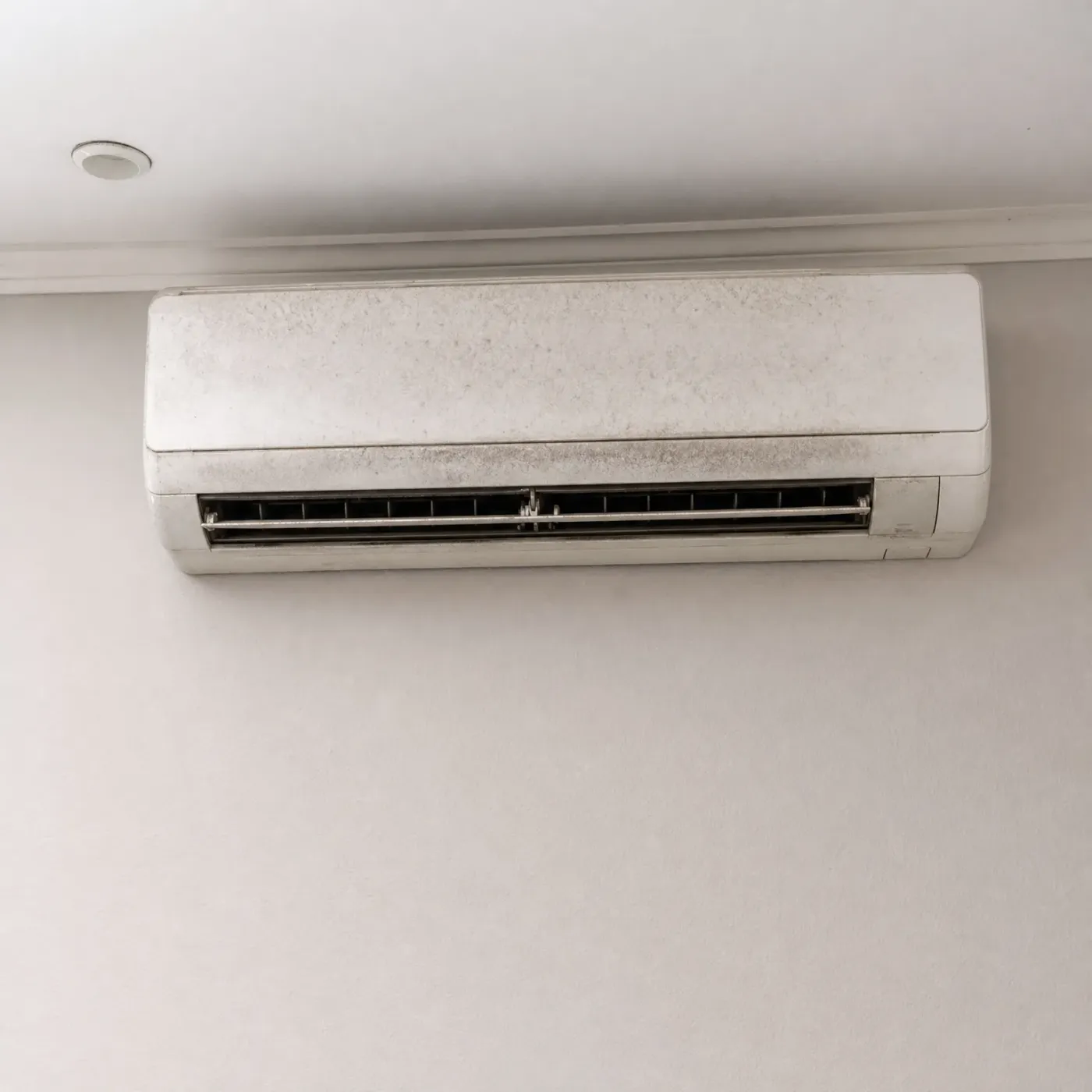
A white wall-mounted mini-split air conditioner indoor unit with visible dust and discoloration, installed near the ceiling on a plain beige wall.

Draining wrong

Dust caked across the housing and a vent left hanging open point to a unit that hasn't been serviced in a while. When the drain line or pan underneath clogs with that same buildup, water backs up and finds another way out, usually down the wall or onto the floor below.

What's Causing the Leak

Clogged drain line

  • Algae and dust build up inside the drain line over time and narrow the path water needs to leave through.
  • Water backs up inside the indoor unit until it finds another way out, usually along the front panel or down the wall.
  • A clear line lets condensate drip out near the outdoor unit; if you don't see that drip anymore, the line may be blocked.
  • Clearing the line is a straightforward fix for a contractor and usually stops the leak without touching anything else on the system.
  • If the line was never pitched correctly toward the outside when it was installed, it can clog again even after it's cleared.

Frozen coil from low refrigerant

  • A mini split low on refrigerant can grow ice on the indoor coil instead of just pulling heat from the air.
  • When the system shuts off or you turn it down, that ice melts all at once and the drain pan can't keep up.
  • This points to a refrigerant leak somewhere in the lines, not a dirty filter or a clogged drain.
  • Rhode Island winters push the system hard for months, and a slow leak gets worse the longer it runs.
  • A contractor has to find the leak and seal it before adding refrigerant, or the ice comes back.
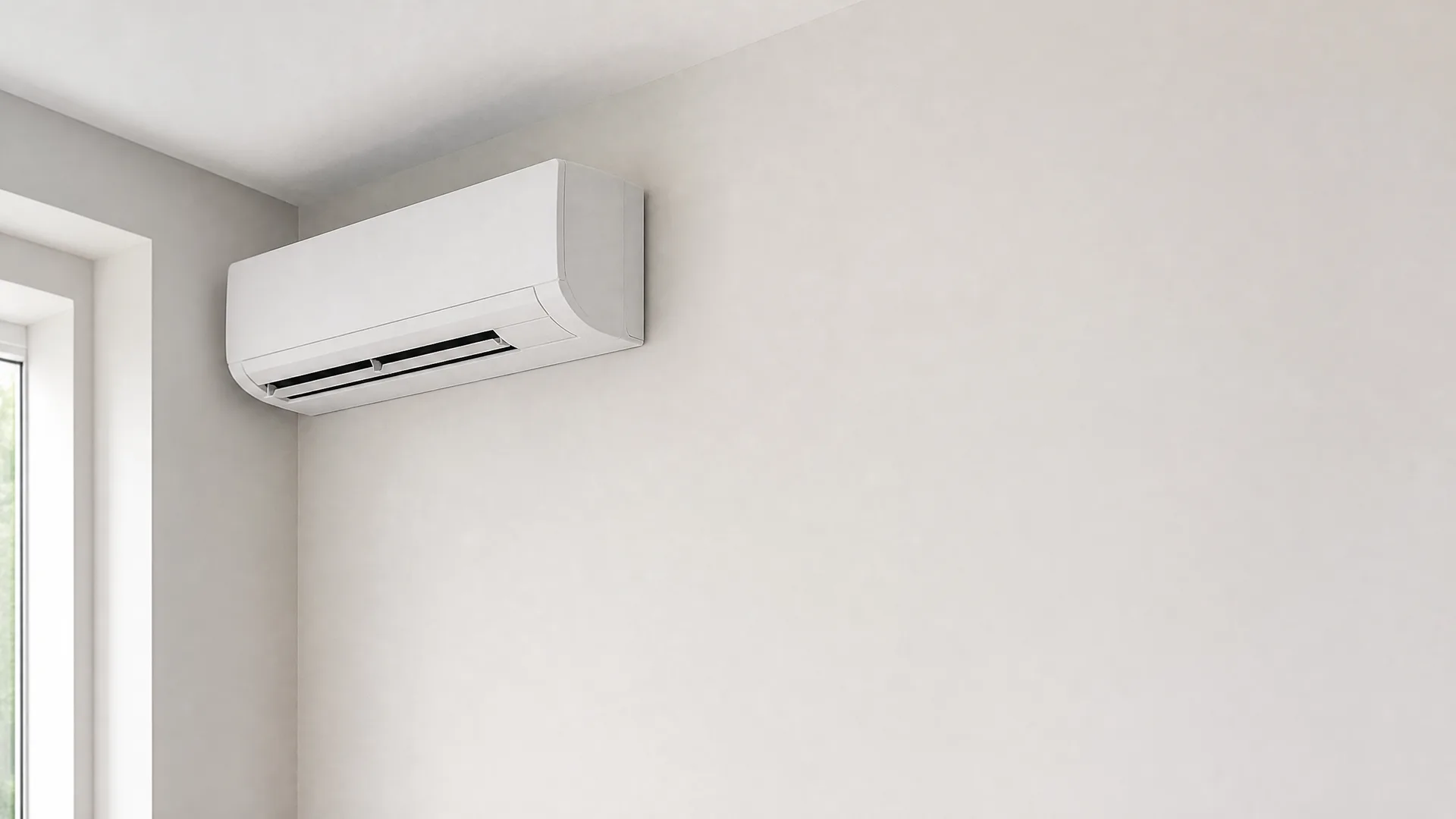
A white wall-mounted mini-split air conditioner installed high on a plain light-colored interior wall near a corner, with a window frame at the left edge.

Why heating mode still makes condensation

A mini split in heating mode still has a cold moment to deal with. Defrost cycles kick in when outdoor temperatures drop near freezing, which happens often in a Rhode Island winter. The outdoor coil frosts over, and the system briefly reverses to melt that frost. That meltwater has to leave through the same drain line condensation uses in summer. If that line is blocked or pitched wrong, the water from defrost has nowhere to go but back into the unit.

A white wall-mounted mini-split air conditioner installed near the top of an interior corner wall, with large blank light-colored wall space to the left.

The drain line slope matters year round

Every mini split drain line depends on gravity to carry water out of the house. It needs a steady downward pitch from the indoor unit to wherever it empties outside. A line that sags in the middle traps water at that low point, and the trapped water freezes solid during a cold snap. Once ice blocks the line, condensate and defrost water back up into the indoor unit instead of draining away, no matter how clean the rest of the line is.

A man in a dark blue shirt stands in an open front doorway of a stucco and wood-clad house, facing a blond woman seen from behind in the foreground on a stone walkway.

What that drip is doing to your house

A drip you keep wiping up isn't just a nuisance. Water finding its way along a wall or down into the floor beneath the indoor unit can stain drywall, warp trim, and soften the subfloor if it keeps going through a Rhode Island winter. Mini splits usually sit high on an interior wall, so the water has a few feet to travel before you see where it lands, and by the time you notice a mark, the leak has likely been going on longer than it looks.

You're someone who handles the small stuff before it turns into a bigger job, which is exactly the right instinct here. A clogged drain line or a frosted coil that isn't defrosting right doesn't fix itself, and leaving it means paying to repair water damage on top of whatever's wrong with the unit. Once you send in the details of what you're seeing, finding the right contractor to look at it stops being something you have to figure out on your own. A local contractor who works on mini splits will reach out from there.

Interior corner of a living room with a beige upholstered sofa and dark cushion in the foreground, a ceramic vase of leafy branches on a dark side table by a curtained window, a framed picture on the wall, and a wood-surround fireplace at right.
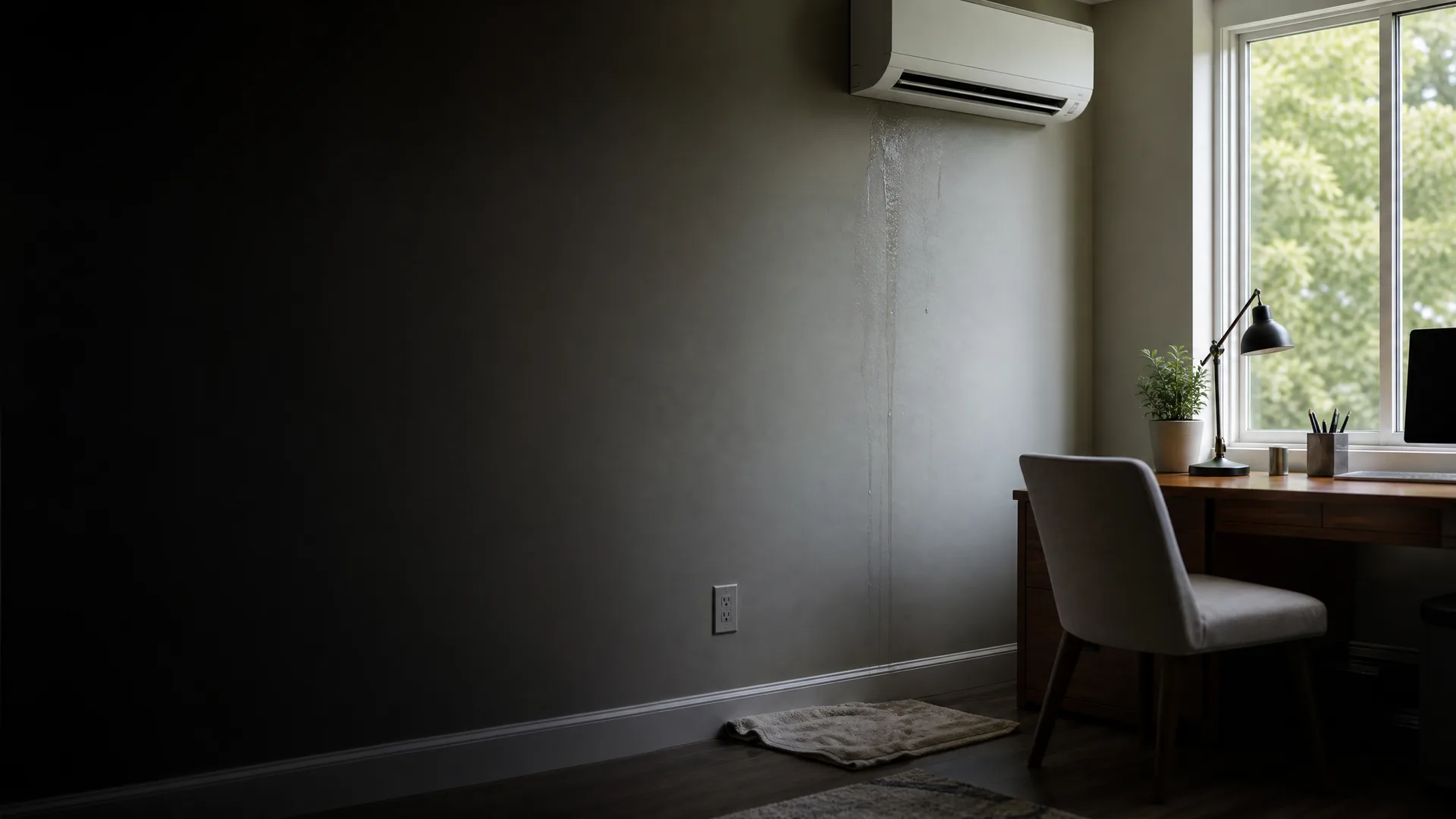
A dim room with a wall-mounted mini-split air conditioner above a vertical water stain running down the wall to a towel on the floor, with a desk, chair, lamp and potted plant beside a window.

It's late afternoon in July and you're at your desk in the home office, the mini split humming on the wall above you. You notice the air feels less cold than it did an hour ago, then you see it: a wet streak running down the wall under the indoor unit, already reaching the baseboard. You grab a towel off the hallway closet shelf and lay it on the floor under the drip. You check back twenty minutes later and the towel's soaked through. The streak hasn't grown, but it hasn't stopped either. You leave the towel down and go back to your desk, glancing over every so often to see if it's spreading.


A white wall-mounted mini-split air conditioner installed high on a beige interior wall below crown molding, with a sheer white curtain on a dark rod at the left edge.
A clean mini split drains straight through the line with nothing showing on the casing or the wall below it.
A dusty white wall-mounted mini-split air conditioner unit installed near the ceiling on a plain light-colored interior wall, with a small recessed ceiling fixture at upper left.
Dust and grime caked on the casing often mean a dirty filter or coil, the kind of buildup that leads to a clogged drain.
A woman in a cream cowl-neck sweater sits by a window with snow outside, in a dimly lit living room with a sofa, lit lamp, mirror, candles and a fireplace.
A woman in a gray turtleneck sweater sits beside a large window looking out at snow-covered evergreen trees, in a dimly lit living room with a lit fireplace, lamps, couch and houseplant.
A woman in a cream turtleneck sweater stands beside a large window with snow-covered ground and bare trees outside, in a dimly lit living room with lamps, a sofa and framed art.
A woman in a grey cowl-neck sweater stands indoors near a window, looking out at falling snow, with a lamp, framed picture and couch in the warmly lit room behind her.

A mini split pro near you

Send the request and finding a pro stops being your problem.

No fee to send it, and nothing to sign.

A leak you catch early

You notice the drip the first afternoon it shows up, before it's left more than a damp patch on the wall. A quick look tells a contractor whether the drain line is clogged or the unit wasn't mounted level, and either one is a straightforward fix. The indoor unit comes apart, the line gets cleared or the pitch gets corrected, and the leak stops for good. Nothing underneath has had time to absorb water. The drywall dries, the trim stays straight, and the subfloor never gets wet enough to matter. A problem caught this early costs you an afternoon of noticing and nothing else.

A leak left to run all winter

If the drip keeps going through a Rhode Island winter, it stops being just a wet spot on the wall. Water tracks down behind the drywall, pools where the indoor unit mounts, and sits in the subfloor without anywhere to dry out. Trim swells and warps. Paint bubbles. What started as a clogged drain line or a tilted mount turns into a repair that includes the wall and the floor underneath it, not just the mini split. The system itself may still run fine the whole time, which is part of why the water keeps getting ignored until the damage is the bigger problem.

A wall-mounted white mini-split air conditioner indoor unit with visible dust and grime around its outlet vent, installed near the ceiling on a plain light-colored wall.
Before you get your mini split repair
A white wall-mounted mini-split indoor unit on a light gray interior wall, with a white curtain on a black rod at left and a leafy plant in the lower left corner.
After you get your mini split repair

Fixing it yourself versus calling someone

A shop vac at the drain port, a pipe cleaner run through the line, a check that the indoor unit is still level on the wall, these are things you can try before anyone comes out. Sometimes they clear a minor clog and the dripping stops the same day. What they won't tell you is why the line clogged in the first place, or whether the unit is pitched wrong behind the wall where you can't see it. If the leak comes back inside a week, you've spent the time and you're still at square one, except now there's another week of water behind the drywall.

Why most Rhode Island homeowners call a contractor

A mini split is the one thing in the house that isn't tied into the gas furnace, and a lot of people don't have a second person they already trust to look at it. A contractor brings a gauge to check the drain line's slope, a borescope to see inside the line without opening the wall, and the parts on hand if the pan itself has cracked. Given how expensive power is here, nobody wants to run the unit less than they need to just to keep water off the floor. Once you send the form, a contractor reaches out and the question of what's actually wrong stops being something you have to guess at.

Power costs 29.48 cents per kilowatt-hour statewide

A clogged drain line or a bad defrost cycle won't fix itself, and at 29.48 cents a kilowatt-hour, a mini split working harder than it should to heat your home shows up fast on the bill. Catching the leak early keeps both the water damage and the cost from spreading.

EIA-861 2025 statewide residential average

A bearded man in a plaid flannel shirt stands indoors looking out a frost-covered window, with a steaming dark blue mug on the wooden sill and snow-covered trees outside.
A smiling man in a dark blue T-shirt sits on a light gray sofa in a living room with a wooden shelf and window behind him, with a laptop edge visible in the foreground.
A two-story house with light beige horizontal siding, a gabled roof, a small covered front porch with dark door, and shrubs along the foundation, set behind a mown lawn and wet sidewalk with large leafy trees on both sides.

Summers in Rhode Island run heavy, with a dew point that averages 61°F across June, July and August, according to NOAA climate data. That's the kind of air your mini split is built to wring out, and the condensation it pulls off the indoor coil all summer has to leave through the drain line. Come winter, that same line is still there, often with months of algae and dust sitting in it from the humid season behind you. A line that was draining fine in August can be narrow enough by January that defrost water backs up instead of running out.

NASA POWER T2MDEW county cells weighted by homes

A mini split leaking water in winter almost always comes down to one of two things: a drain line that's clogged and can't carry condensation away, or a defrost cycle sending more water to that line than it can handle, often because the unit isn't sitting level. Either one is worth catching now, while the fix is a drain line and not drywall, trim, and subfloor. You already know not to let a small problem sit, and this is one of those. Once you send the form, you're done hunting for who to call. A contractor who handles mini splits in your part of Rhode Island gets your details and reaches out to sort out what's going on behind that panel. The drip on your wall stops being something you're tracking and becomes something someone else is handling.

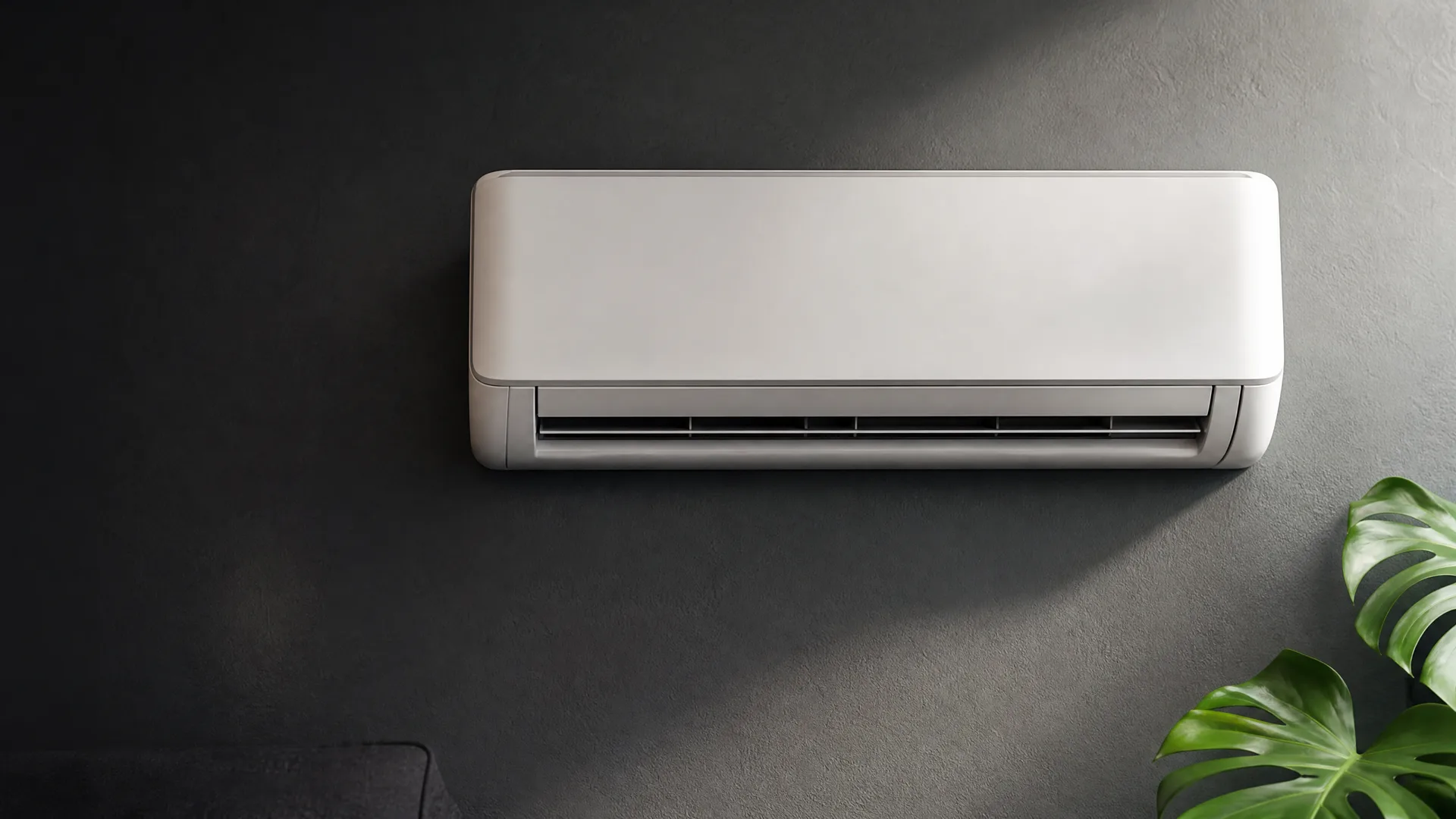
A white wall-mounted mini-split air conditioner on a dark grey textured wall, with a monstera plant leaf at the lower right corner.

A local pro for your mini split repair

Step 1 of 3: Equipment