Running it through a Rhode Island winter
The rattle or buzz keeps showing up every cold morning, and you're left guessing whether it's normal defrost cycling or a part working loose inside the unit.
A pro who works on mini splits
Cold mornings bring a new sound out of your mini split, a clicking, a buzzing, or a hard rattle right when the heat kicks on. This page gets into what's behind each sound and when it points to real trouble. If it's worth a second opinion, you can get matched with a local contractor who works on these systems all winter.
Get matchedA mini split that clicks or buzzes in a Rhode Island winter is usually just doing its job in cold air. The clicking is often the plastic housing and the internal dampers expanding and contracting as the unit cycles between heating and defrost, something that happens more in January and February when outdoor temperatures sit near or below freezing for long stretches. A heat pump pulls heat from outside air even in the cold, and to keep ice from building on the outdoor coil, it periodically reverses into a defrost cycle. That reversal is where you'll hear a whoosh or a harder clunk, and a fan that briefly changes speed or stops. A steady buzz is different. That can mean a loose panel, a failing fan motor, or a component not sitting right, and it tends to get louder or more constant rather than happening only at startup or during defrost. If the sound is new, getting sharper, or showing up outside those cycles, it's worth having someone look at it before a small part failure turns into a bigger repair.




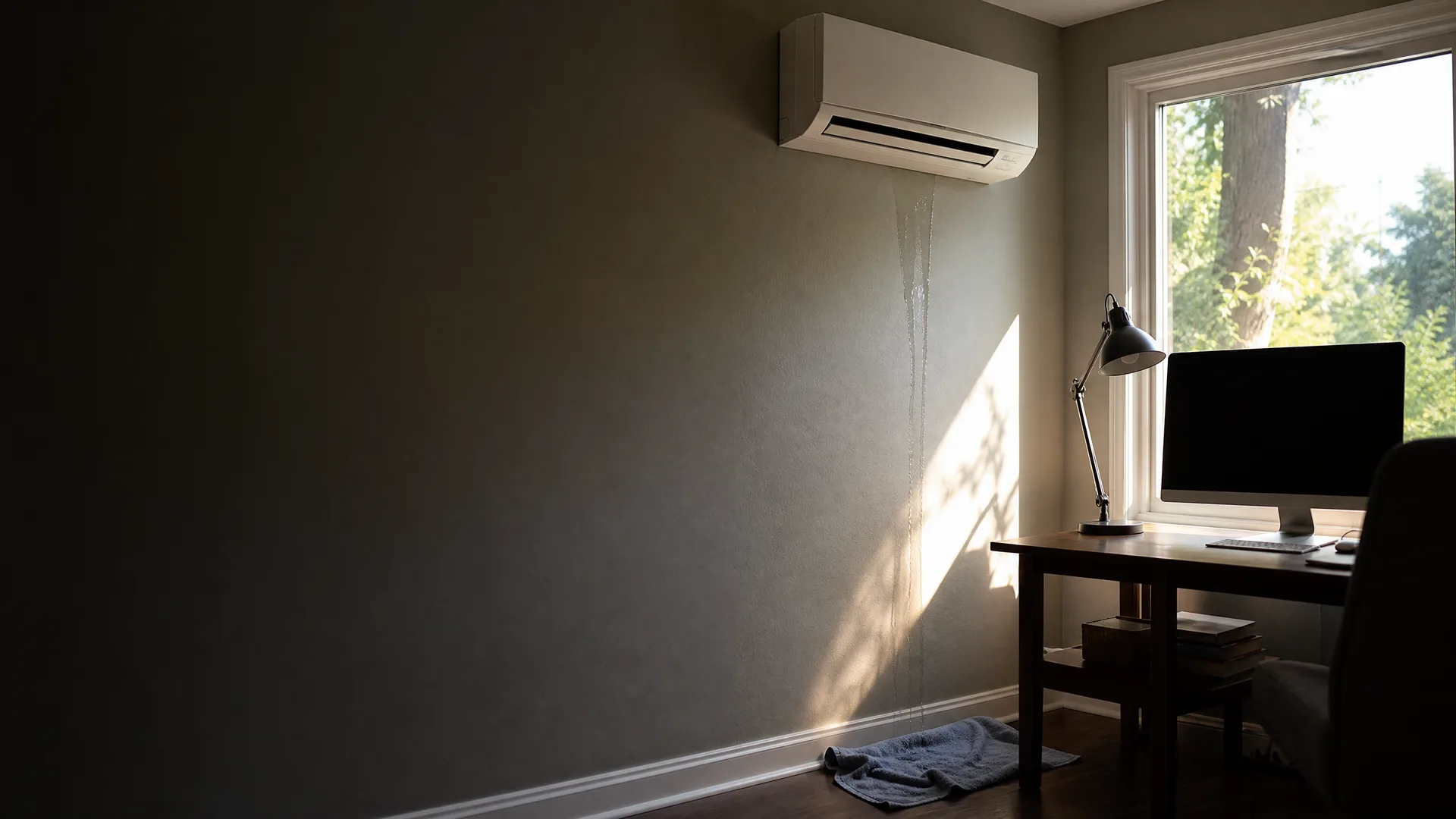
It's July, and the AC has been running most of the afternoon. You're at the desk in the office upstairs when you notice the wall under the mini split looks dark. A streak has worked its way down from the unit, soaking into the drywall, and there's already a small puddle on the floor. You grab a towel and press it against the baseboard, but the wet keeps coming. The unit's still blowing cold air like nothing's wrong. Outside, it's the kind of sticky Rhode Island afternoon where you need it running, so shutting it off and leaving the room closed up isn't really an option you want. You stand there with the towel, watching the line darken again.
A rattle that stays through the whole heating cycle, not just at startup or defrost, usually means something inside has worked loose. On a wall-mounted mini split that can be a fan blade that's hit ice buildup on the coil, or a mounting bracket that's vibrated against the wall after a few winters of running hard. With most Rhode Island homes heating on gas, the mini split doesn't carry the whole house through January, but it's still working against real cold every time it cycles, and that's exactly when a loose part makes itself known. Worth having someone look at it before a minor rattle turns into a fan blade hitting something it shouldn't. A local contractor who services mini splits through a Rhode Island winter has heard this particular rattle before and knows which part on your system tends to go first. You'd be matched with one contractor near you, not a handful calling at once, so you're dealing with someone who can actually look at your unit and tell you what's going on with it.
A mini split works harder below freezing because it has to pull heat out of cold outdoor air, and that strain shows up as sound before it shows up on your utility bill.
If the noise is new and keeps getting louder night after night, that's the compressor or fan motor telling you something's changed, not just the cold talking.


The rattle or buzz keeps showing up every cold morning, and you're left guessing whether it's normal defrost cycling or a part working loose inside the unit.
A local contractor who services mini splits all winter can tell you quickly whether that sound is routine or the start of a real problem, and fix it if it is.


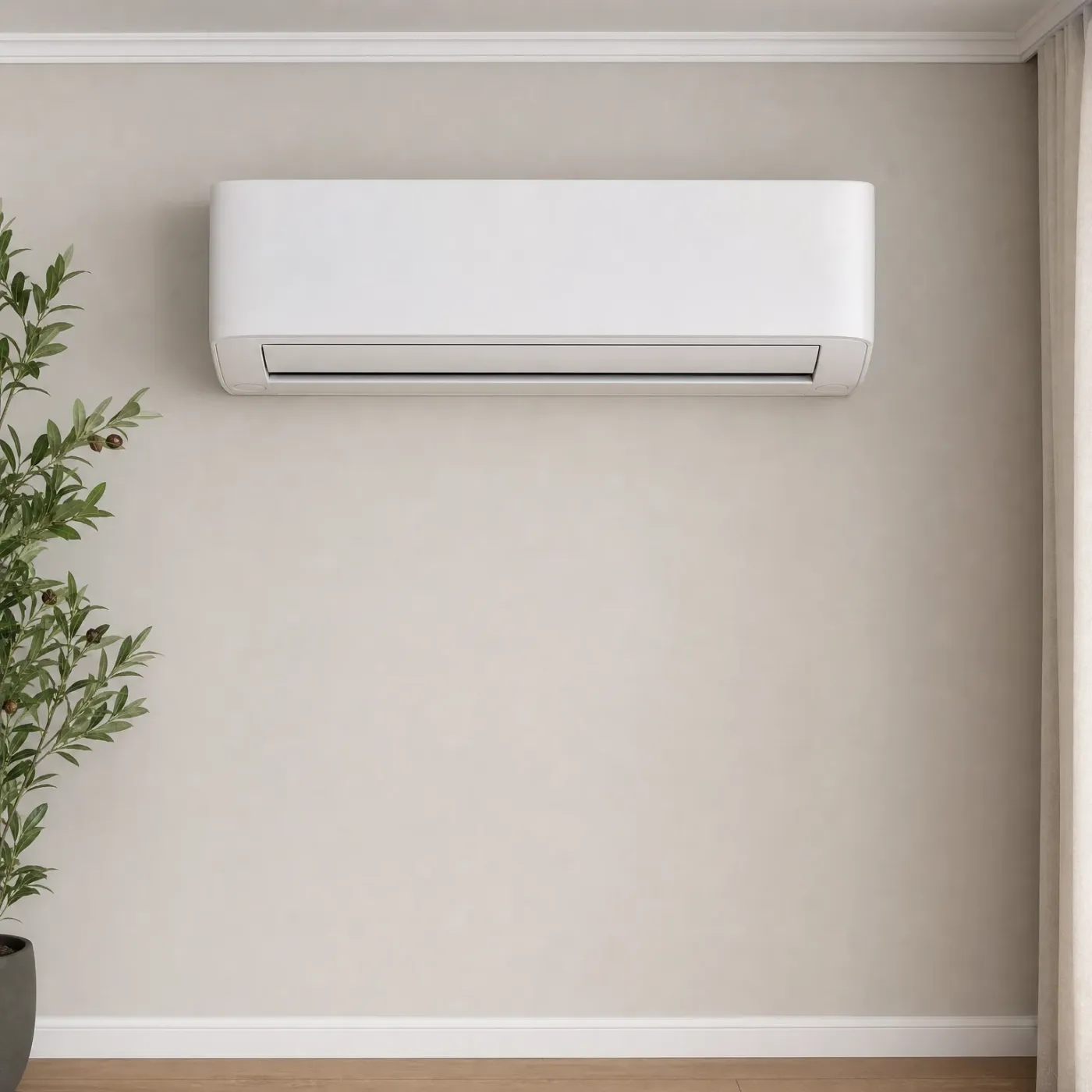
A mini split that sounds right in winter clicks softly at defrost and hums steady once the compressor settles in. Air comes off the coil clean, the case stays white, and nothing rattles once the unit is a few minutes into a heating cycle.
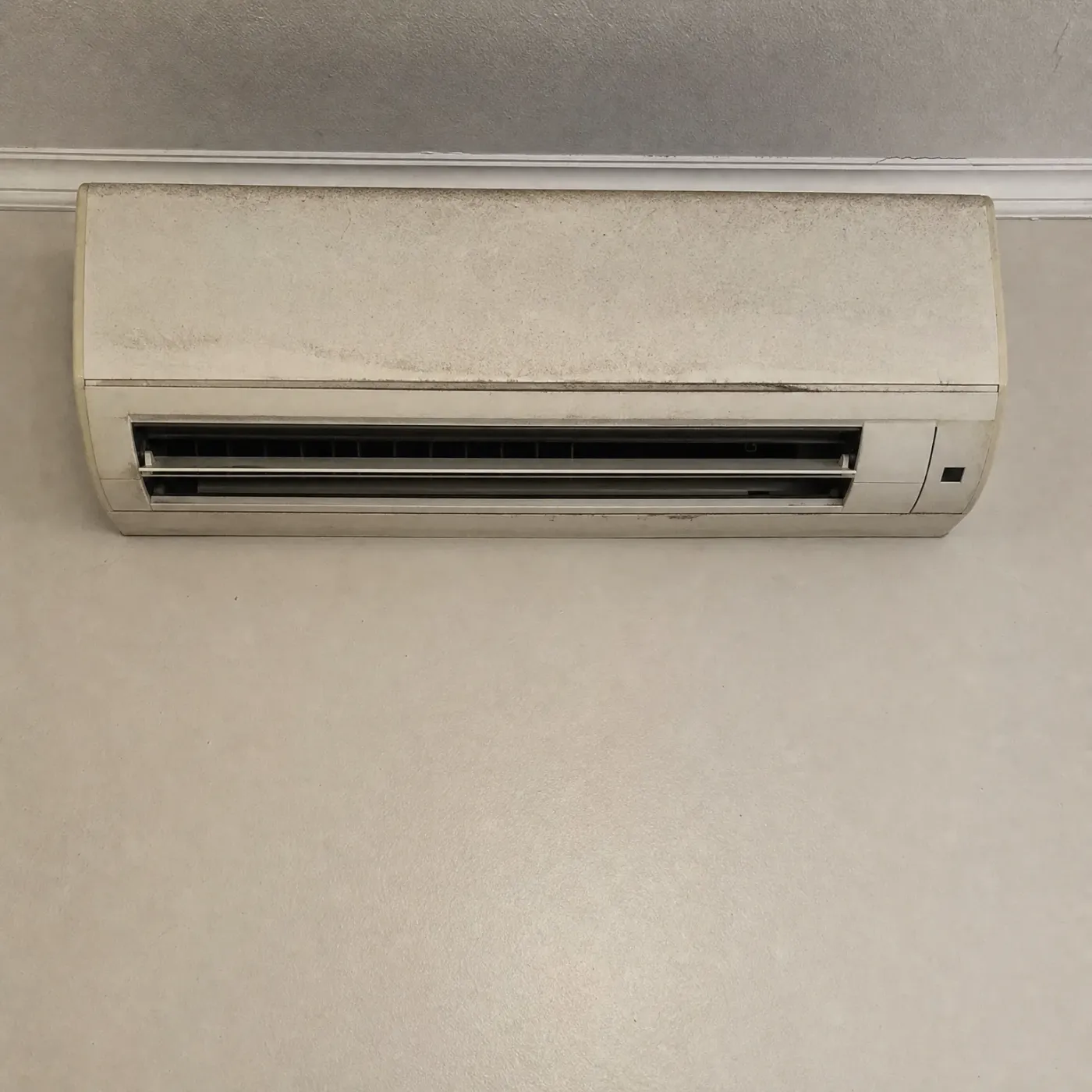
Grime across the casing and vents usually means the same buildup is sitting on the coil behind it. That coil has to pull heat out of cold air all winter, and dust on it makes the fan work harder, which is where a lot of new noise starts.
At 29.48 cents per kilowatt-hour, every extra hour your mini split runs on a worn part shows up fast on the bill. A rattle or a hard buzz usually means it's pulling more power than it should to push through winter, not just making noise.
EIA-861 2025 statewide residential average
Outdoor air passes over the outdoor coil and gives up its heat.
Refrigerant inside the coil absorbs that heat and turns to gas.
The compressor presses the gas, raising its temperature further.
Hot gas travels inside to the indoor coil through the line set.

Most of what your mini split does in a Rhode Island winter is normal. The clicks at defrost, the hum when the compressor settles in, the buzz on a cold morning. None of that means trouble by itself. What matters is whether the sound changes, whether it gets louder, or whether it sticks around past the point where the system should have settled.
If you've listened and you're still not sure, that's reason enough to have someone take a look rather than wait it out through more cold mornings. Submitting your info gets you matched with one licensed contractor near you, not a handful of companies calling at once. Someone who works on mini splits all winter in this climate has heard the difference between a unit that's fine and one that's starting to fail, and they can tell you which one you're dealing with.

Your request goes to one pro, not a list of companies.