Tell us about the job
Takes about a minute. No obligation.

A mini-split compressor in Providence County spends most of the year off. Homes in Providence County, RI run cooling about two months a year, from July through August. The refrigerant circuit, the contactor, and the condenser fan accumulate little seasonal wear, which means a contractor diagnosing a failure here looks first at age, installation quality, and anything that went unserviced during the idle months, not at parts ground down by continuous operation. A system that sat through a long off-season can corrode at electrical connections, lose refrigerant charge through slow leaks, and throw a fault on the first hot day before the homeowner has any warning.
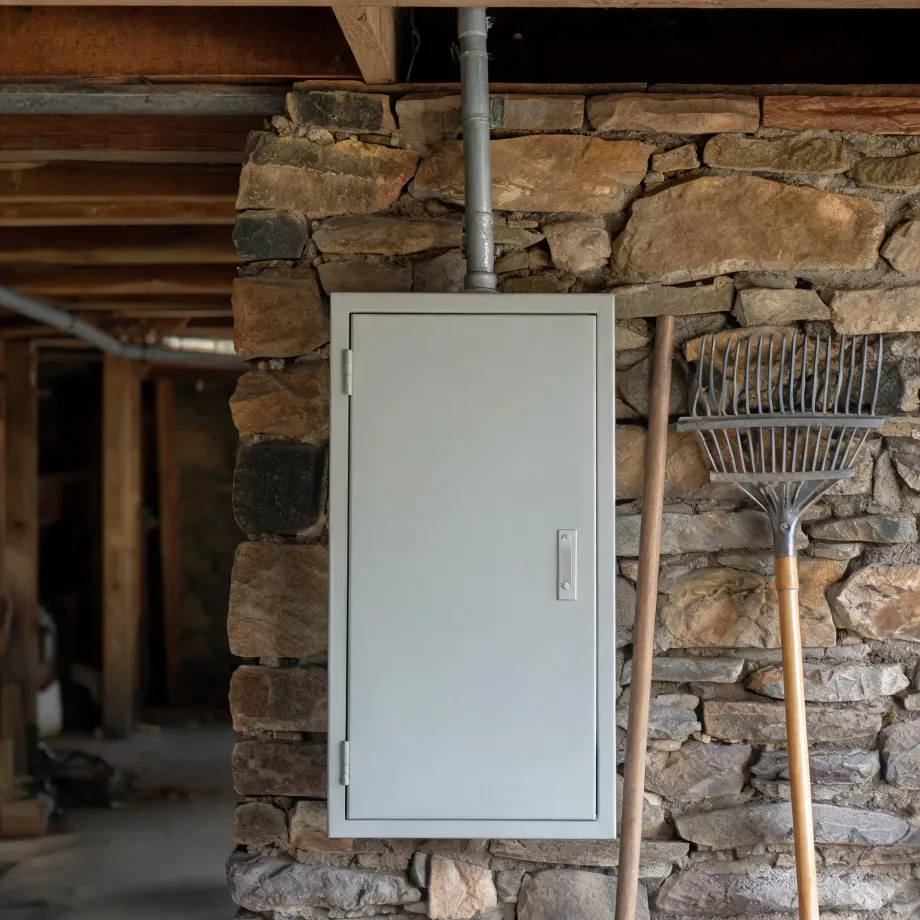
A mini-split sitting in a Providence County house is, in most cases, not the first system that house was built around. Half the homes in Providence County, Rhode Island were built in 1956 or earlier (2020-2024 ACS 5-year). That gap between construction and current equipment shows up inside the repair: a contractor opening a unit has to account for line set routing, electrical supply, and condensate drainage that were adapted to the mini-split rather than planned for it. Adapted runs corrode faster, flex at the joints, and can restrict flow in ways the equipment's error codes do not directly name. What the contractor finds at those junctions decides how far the repair goes.
The Parts of a Mini-split a Contractor Checks During Repair
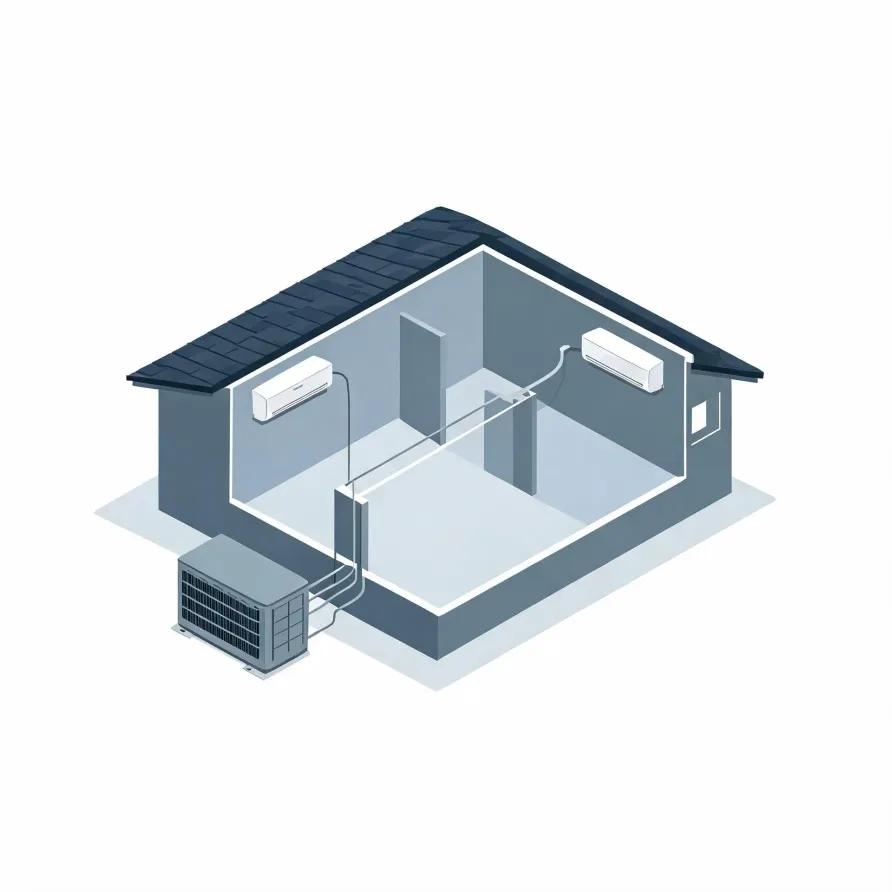
The indoor air handler mounts high on an interior wall and pulls room air across its coil and fan to deliver conditioned air. When that unit is the problem, a contractor will find the fan sluggish, the coil frozen or fouled, or the board inside failing to respond. The blower motor, the thermistor, and the drain line are all housed here and each can be the source.
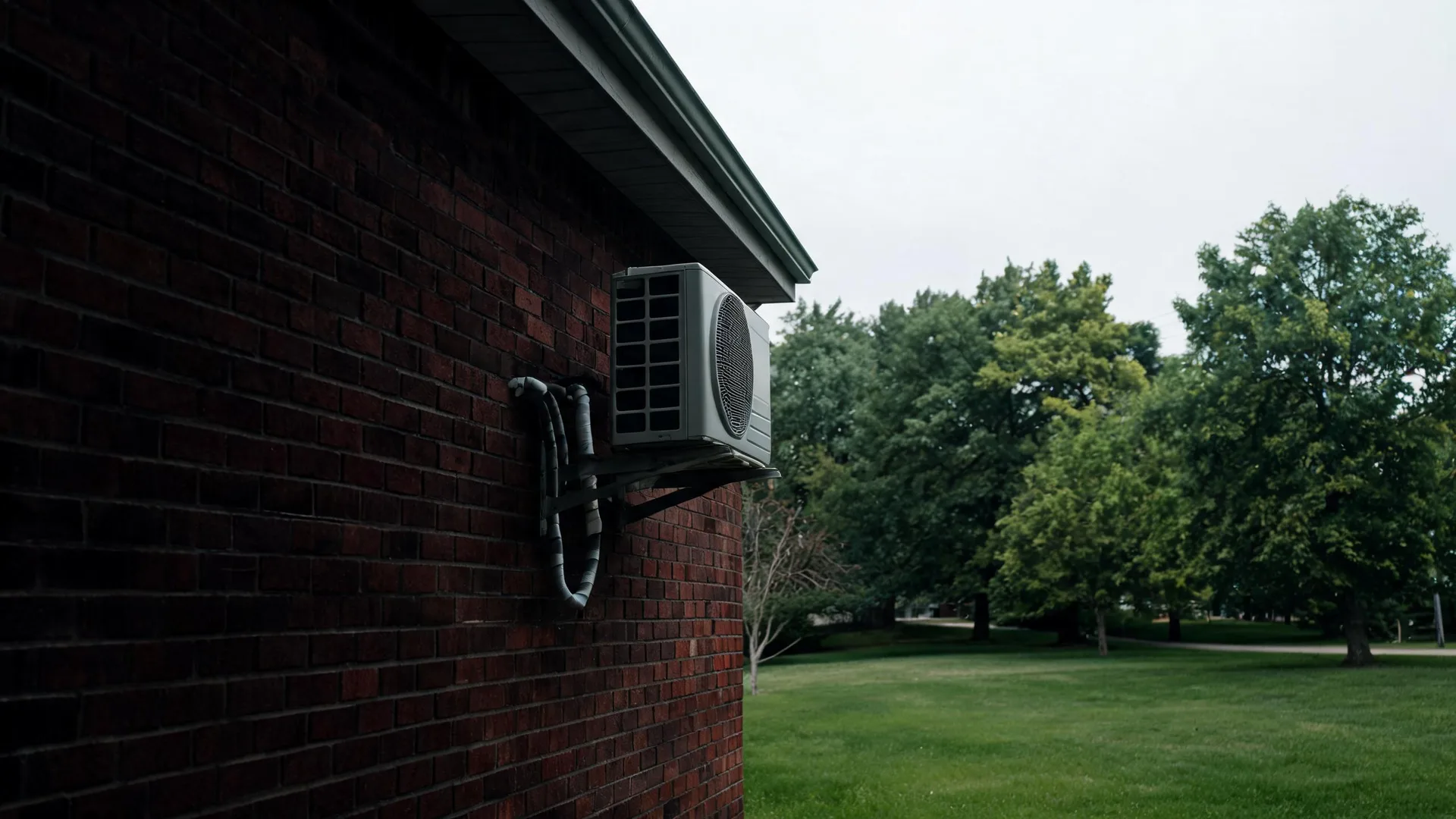
The outdoor condenser unit sits on a pad or bracket outside the house and holds the compressor, the second coil, and the fan that sheds heat to the air. The refrigerant lines and the communication cable run between the two units through a small penetration in the wall. A fault anywhere along those lines, or inside the condenser itself, shows up as a system that runs but does not perform, or does not run at all.
The drawing shows a typical layout, and a licensed contractor determines which components apply and what repair is needed in your specific home.
Find a contractor in Providence CountyProvidence County, by the numbers
236 severe weather events were recorded in Providence County, Rhode Island between 2015 and 2024.
NOAA National Centers for Environmental Information, Storm Events Database, bulk CSV export, events 2015-01-01 through 2024-12-31.Half the homes in Providence County, Rhode Island were built in 1956 or earlier (2020-2024 ACS 5-year).
U.S. Census Bureau, 2020-2024 American Community Survey 5-Year EstimatesProvidence County, Rhode Island holds 277,740 housing units (2020-2024 ACS 5-year).
U.S. Census Bureau, 2020-2024 American Community Survey 5-Year EstimatesOwners occupy 56.9% of the occupied homes in Providence County, Rhode Island (2020-2024 ACS 5-year).
U.S. Census Bureau, 2020-2024 American Community Survey 5-Year EstimatesCodes & Standards Covering Mini-Split Repair in Providence County, Rhode Island2 sourced rules & standards
What Providence County and Rhode Island Require for HVAC Repair
A Rhode Island master licensee needs no separate sheet metal licence while the air handling equipment is ten (10) tons or less, or the heating equipment does not exceed 250,000 BTUs; above either figure the sheet metal work must be subcontracted to a licensed sheet metal contractor.
Rhode Island requires a licence from the Department of Labor and Training to work in the mechanical trades: nobody may hold themselves out as a master, or advertise that they will install refrigeration and air conditioning or air distribution systems, without one.
Severe Weather Events in Providence County
Extreme weather puts real stress on heating and cooling equipment, and Providence County's climate means local mini-splits are not working in mild, stable conditions. Repair demand follows what the weather does, which is why the record below is relevant to any conversation about keeping this equipment running.
236 severe weather events, 2015–2024. Source: NOAA National Centers for Environmental Information, Storm Events Database.